
 EN
EN



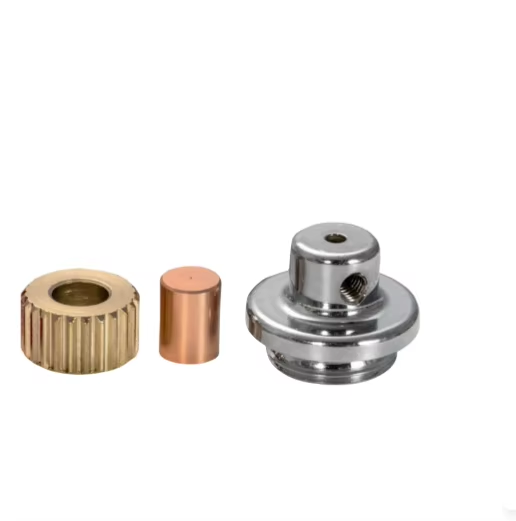
Aerospace Industry: High-Precision CNC Parts for Extreme Environments
The Role of CNC Machining in Aerospace Precision Components
With CNC machining, aerospace parts can be made to incredibly tight tolerances sometimes down to plus or minus 0.0001 inches. This level of accuracy keeps things working properly even when exposed to really harsh conditions including extreme heat, sudden pressure changes, and intense forces from airflow. Such precision matters a lot for important aircraft systems. Think about turbine engines where every fraction of an inch counts, or landing gear that needs to hold up during takeoff and landing, not to mention the structural integrity of the airframe itself. What makes this process so valuable is that it maintains consistency throughout big manufacturing batches. Plus, modern CNC machines handle tough materials like titanium alloys and Inconel without breaking a sweat, which was much harder to achieve with older methods.
Case Study: CNC-Produced Turbine Blades in Commercial Aviation
Today's jet engines rely on turbine blades made through CNC machining processes. These blades have intricate internal cooling channels that can handle extreme heat conditions exceeding 1,500 degrees Celsius. Research published in 2023 showed that these newer blade designs actually boost fuel efficiency around 12 percent when compared against older cast models from just a few years back. The five axis machining technology allows for much more accurate shaping of airfoil surfaces. This precision improves how air moves through the engine and cuts down on wear and tear over time. As a result, engines last longer and perform better overall, which is why so many manufacturers are making the switch to these advanced manufacturing techniques.
Materials and Tight Tolerances Required in Aerospace Applications
Aerospace CNC parts require materials engineered for extreme conditions:
| Material | Key Properties | Common Applications |
|---|---|---|
| Titanium 6Al-4V | High strength-to-weight ratio | Wing spar components |
| Inconel 718 | Thermal resistance up to 700°C | Combustion chambers |
| Carbon composites | Corrosion resistance | Satellite housings |
Critical components such as hydraulic manifolds also demand surface finishes finer than 0.4μm Ra to resist micro-cracking under sustained vibration.
Trends in CNC Automation and the Debate Around Additive Manufacturing
When it comes to making those complicated aerospace parts, AI powered automation in CNC systems can cut down production time by about thirty percent without sacrificing accuracy below plus or minus two microns. Additive manufacturing definitely has its strengths when it comes to quick prototypes and flexible designs, but most folks still go with traditional CNC machining for anything that matters in flight situations because of better material properties and how well they handle stress over time. We're starting to see some interesting combinations too. For instance, many manufacturers now print out rough shapes of rocket nozzles first with 3D printers and then finish them off on CNC machines. This approach works great for parts that need intricate geometry but also require extremely tight tolerances at the same time.
Automotive and Electric Vehicle Manufacturing: CNC for Prototyping and Mass Production
How CNC Parts Streamline Automotive Production Processes
Multi-axis CNC machining reduces setup times by 30–50%, accelerating production of complex automotive components like engine blocks and transmission housings. Advanced 5-axis systems achieve tolerances below ±0.005 mm, minimizing post-processing needs and enabling 99.8% interchangeability on assembly lines.
| CNC Axis Configuration | Setup Reduction | Max Part Complexity | Tolerance Range |
|---|---|---|---|
| 3-Axis | 15–20% | Basic geometries | ±0.025 mm |
| 5-Axis | 40–50% | Freeform surfaces | ±0.005 mm |
This capability supports faster time-to-market and tighter quality control across vehicle platforms.
CNC in EV Drivetrain and Battery Component Manufacturing
Electric vehicle manufacturers depend on CNC machining for high-performance components including battery enclosures made from flame-retardant aluminum alloys, motor housings with integrated cooling channels, and vibration-dampening mounts for power electronics. According to a 2023 industry study, CNC-machined battery trays deliver 12–18% better thermal management than stamped alternatives, improving safety and longevity.
Data Insight: 78% of Tier-1 Suppliers Use CNC for Engine Block Prototyping (Deloitte, 2023)
According to Deloitte's 2023 findings, many top-tier suppliers have turned to CNC machining for creating engine block prototypes. Why? Because it works with actual production materials such as CGI-450 cast iron, cuts down iteration time to just 3 to 5 days, and complies with those strict ASME Y14.5-2018 dimensional requirements. Most automotive companies now see CNC as essential when moving from initial testing phases straight into full-scale manufacturing. The technology simply makes sense for businesses looking to save both time and money while still meeting quality standards across their product lines.
Medical Devices: CNC Machining for Life-Saving Implants and Instruments
Precision and Regulatory Standards in Medical-Grade CNC Parts
The medical CNC components need to hit those super tight tolerances below 25 microns while also passing all the FDA requirements plus meeting ISO 13485 standards. Think about things like surgical guides, bone screws or even parts for MRI machines. These get made from stuff that won't harm the body inside, mostly titanium Grade 5 or 316L stainless steel. According to research coming out of Johns Hopkins in 2023, nearly all (like 92%) of the spinal implants approved by the FDA today actually use this CNC machined titanium stuff because it just works better against corrosion and integrates nicely with bone tissue over time.
Case Study: CNC-Machined Orthopedic Implants
Five-axis CNC machines produce patient-specific knee implants with ±0.01 mm accuracy, shaping cobalt-chrome femoral components based on individual CT scans. This customization reduces post-operative complications by 34% compared to off-the-shelf models, according to the Orthopedic Design Journal (2022). Post-machining treatments such as passivation ensure long-term ionic stability and biocompatibility.
Sterilization-Compatible Materials and Surface Finishes
Most reusable surgical tools come from electropolished 17-4PH stainless steel these days because it has a surface roughness of around 0.4 microns Ra or less, which helps keep bacteria from sticking to them. Some devices also feature anodized titanium oxide coatings that let them survive over 500 autoclave runs before showing signs of wear. When following the ASTM F2459 standards for cleanliness, many manufacturers actually mix two methods together: abrasive flow machining plus ultrasonic cleaning. This combination works pretty well at getting those instruments spotless between uses.
Electronics and Defense: Miniaturization and Reliability in Critical Applications
Miniature CNC Components in Consumer Electronics and Circuitry
Consumer electronics increasingly rely on sub-millimeter CNC parts such as smartphone camera mounts and microconnectors for wearables. Using aluminum and brass alloys, CNC machining achieves tolerances under ±0.005 mm, ensuring structural integrity in compact designs. This precision prevents signal interference in 5G circuitry and supports durability in foldable display mechanisms.
Rapid Prototyping to Accelerate Electronics Development Cycles
Computer Numerical Control (CNC) machining cuts down on those long waits we used to have for prototypes, sometimes turning weeks into just a few days work. The hardware gets made right from those CAD designs folks draw up on their computers. According to a recent McKinsey study from last year, around two thirds of companies working with electronic components now rely on CNC machines when they need to check out their first sample parts. And this speed really matters for people developing those tiny sensors for the Internet of Things. These engineers often find themselves going through anywhere between ten and fifteen different versions before settling on something that works properly for mass production.
CNC in Defense Systems: Radar Housings and Military-Grade Durability
Military equipment needs parts made through CNC fabrication using materials like titanium or nickel superalloys that can handle really tough conditions ranging from -40 degrees Celsius all the way up to 300 degrees Celsius plus they need to stand up against actual ballistic hits too. Take naval radar systems as just one case study here. The enclosures for these systems get manufactured on five axis CNC machines which allows engineers to make those tight seals that keep out salt water but still let radio frequency signals pass through clearly. And before anything gets shipped out, every single component must go through at least 112 hours worth of rigorous MIL STD 810G tests checking how well they survive shocks and vibrations during real world operations.
Security, Compliance, and Performance Standards in Defense CNC Manufacturing
Defense contractors must comply with ITAR and DFARS regulations, requiring CNC suppliers to enforce secure facilities with biometric access controls and encrypted data workflows. All mission-critical components receive full inspection via coordinate measuring machines (CMM), ensuring compliance with AS9100D quality standards.
Oil & Gas and Marine Sectors: CNC Parts Built for Harsh Conditions
Durable CNC Components for Offshore and Extraction Equipment
Offshore oil and gas equipment faces brutal conditions down there at sea. Saltwater eats away at everything, pressures can hit over 20 thousand psi, and temperatures often climb past 1000 degrees Fahrenheit. That's why engineers turn to special materials like nickel-based superalloys (think Inconel 718) and stainless steel 316L. These metals stand up to both the crushing forces and corrosive environment without bending or breaking down. When it comes to critical parts such as blowout preventers and those complex subsea manifolds, manufacturers need components with tolerances tighter than 0.005 inches. The CNC machining process has proven itself time after time in delivering this kind of precision, making all the difference when safety matters most during deep water drilling projects.
Corrosion-Resistant CNC Parts in Shipbuilding and Marine Engineering
The marine engineering field often turns to aluminum 5052 and various titanium alloys when building components such as propeller shafts, ballast valves, and parts of desalination pumps because these materials hold up well against both mechanical stress and saltwater corrosion. To make things last even longer, engineers apply surface treatments including electropolishing which smooths out microscopic irregularities, and nitriding that hardens the metal surface at a molecular level. Offshore wind farms represent another application area where material selection matters greatly. Here, specially designed CNC machined flange connectors come coated with anti-galvanic protection layers. These coatings stop different metals from reacting chemically when submerged together in seawater. Industry reports suggest that this kind of protection can actually double the working life of certain components compared to unprotected versions in similar harsh conditions around coastal areas.
Balancing Customization with Low-Volume Demands in Maritime CNC Production
Maritime engineering often needs special parts made in small runs, sometimes just a few dozen pieces. Think about those unique hydraulic winch gears or the seals for azimuth thrusters that shipyards ask for all the time. CNC machining handles these requests because it can adapt programs quickly and cut material efficiently without needing costly molds or hitting minimum order numbers first. The ability to make changes on short notice really helps when upgrading older vessels. Plus, this kind of manufacturing flexibility is pushing forward new tech developments too, especially in areas like wave energy conversion systems where prototypes need constant adjustments before they hit the market.
FAQ
What is CNC machining?
CNC machining is a manufacturing process in which pre-programmed computer software dictates the movement of factory tools and machinery. It can be used to control a range of complex machinery, from grinders to lathes.
Why is CNC machining preferred in aerospace applications?
CNC machining is preferred in aerospace applications because it offers high precision, can operate in extreme conditions, and utilizes durable metals like titanium and Inconel.
How does CNC benefit electric vehicle production?
CNC benefits electric vehicle production by improving component performance such as battery enclosures and motor housings, leading to better thermal management and increased safety.
What materials are commonly used in medical-grade CNC parts?
Common materials used in medical-grade CNC parts include titanium Grade 5 and 316L stainless steel, known for their biocompatibility and resistance to corrosion.
How are CNC components used in the defense industry?
CNC components are used in the defense industry for applications such as radar housings and military equipment that require high durability and compliance with strict regulations.
Table of Contents
- Aerospace Industry: High-Precision CNC Parts for Extreme Environments
- Automotive and Electric Vehicle Manufacturing: CNC for Prototyping and Mass Production
- Medical Devices: CNC Machining for Life-Saving Implants and Instruments
- Electronics and Defense: Miniaturization and Reliability in Critical Applications
- Oil & Gas and Marine Sectors: CNC Parts Built for Harsh Conditions
- FAQ