
 EN
EN



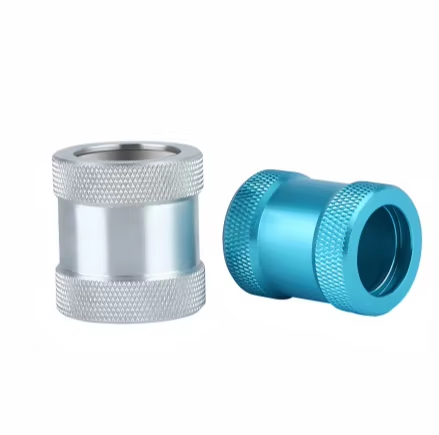
Meeting Industry-Specific Regulatory Standards with Custom Parts
Navigating complex regulatory landscapes requires custom parts engineered for precise compliance. In sectors like medical and aerospace, off-the-shelf solutions rarely meet stringent certification demands, making tailored components essential for operational legality and safety.
Key Certifications: FDA, ISO 13485, AS9100, ITAR, and MIL-STD
Industry certifications play a huge role when it comes to picking materials and processes for making custom parts. For medical stuff, companies have to follow FDA rules plus meet ISO 13485 standards for quality management systems. This basically means they need to keep producing devices that work reliably and won't harm patients. When we look at aerospace components, there's the AS9100 standard that manufacturers must stick to. It focuses on managing risks throughout the whole supply chain and keeping track of every part from start to finish. Defense contractors face their own set of challenges too. They deal with ITAR regulations that restrict who gets access to certain tech secrets, while MIL-STD specs make sure equipment survives harsh environments like deserts or arctic conditions. If companies don't comply with these requirements, they might find themselves shut down completely, facing expensive fines, or worse yet, failing missions where lives depend on reliable hardware.
Ensuring Compliance Through Design and Documentation
Getting regulatory requirements right starts from day one when engineers build things into the specs themselves. Things like tracking where materials come from, setting up points to check if everything works as planned, and figuring out what might go wrong all get built into the foundation. What we call a digital thread connects all these dots between what goes into production, how it's made, and what gets checked along the way. This kind of thorough record keeping saves companies money down the road because they don't have to tear things apart later for fixes. Medical device makers know this well since they need to show regulators exactly what happened at each step of development through something called design history files under FDA regulations part 820. These files basically act as proof that safety standards were followed at every point from concept to finished product.
Global Regulatory Challenges and the Push for Standards Harmonization
The differences between international standards, think EU MDR compared to FDA rules, really trip up companies trying to operate worldwide. Manufacturers end up doing the same tests over and over just to get certified in different countries. That's why many industry organizations push for something like the Medical Device Single Audit Program or MDSAP for short. With MDSAP, a single inspection can cover several regulatory bodies at once, saving time and money. Complete agreement across all regions is still a distant goal, but these kinds of programs definitely make it easier to bring products to market while keeping patients safe, especially when dealing with customized components that go into devices people rely on for their lives.
Engineering Custom Parts for Mission-Critical Performance
Material Selection for Biocompatibility, Temperature Resistance, and EMI Shielding
Choosing the right materials matters a lot when making custom parts for harsh conditions. For medical stuff, we need materials that won't cause problems inside the body. The ISO 10993 standard helps test if polymers and metal alloys are safe enough for implants. When looking at aerospace applications, engineers often go for titanium alloys and PEEK plastics because these materials hold up well even when temperatures swing between minus 55 degrees Celsius and 200 degrees Celsius. Military equipment needs special composite materials that block electromagnetic interference so radar systems and communications don't get messed up during operations. What gets selected really affects safety outcomes too bad materials can lead to rejected implants, planes falling apart mid flight, or entire defense networks going down during missions.
Performance Requirements in Aerospace, Medical, and Defense Applications
The performance standards for mission critical industries aren't just suggestions they're absolute necessities. Take aerospace parts for instance these need to handle constant G forces and vibrations all while staying within incredibly tight AS9100 specifications of plus or minus 0.0005 inches. When it comes to medical tech like surgical robots, there's absolutely no room for particles getting loose during operations, plus they have to survive countless rounds of sterilization without breaking down. Military equipment faces its own set of challenges following MIL STD 810H guidelines which test how gear holds up when submerged underwater or blasted by desert sandstorms. Why do these specs matter so much? Imagine what happens if even one tiny valve fails in space station life support systems astronauts die. Or worse yet, picture a guidance sensor going haywire mid flight threatening entire nations security. That's why manufacturers spend months running accelerated tests that mimic what products would experience over many years of actual service.
Balancing Innovation with Proven Reliability in High-Stakes Environments
Innovation definitely boosts efficiency, but for industries where things can't fail, reliability comes first through solutions that have been thoroughly tested over time. Many manufacturers are turning to additive manufacturing these days to create those complicated shapes, yet they still check everything against older parts that have been working fine for decades in real world conditions. The numbers back this up too - around three out of four aerospace engineers look at old material records before making prototypes for turbine blades according to SAE International's latest report. Medical device makers follow similar logic with their new materials. They won't start using these fancy bioresorbable metals until they've seen them work safely in people for at least five years straight. Makes sense really. When something going wrong could mean lives lost or planes crashing, nobody wants to gamble on experimental tech just because it looks good on paper.
Mitigating Failure Risks in High-Consequence Industries
Consequences of Failure: Patient Safety, Flight Integrity, and National Security
When components fail in highly regulated fields, the repercussions go far beyond just money on the line. Take medical devices for instance – when they malfunction, patients literally lose their lives. Flawed heart valves or faulty diagnostic equipment can lead to situations where doctors make wrong decisions based on bad data. Looking at aerospace, even small part defects matter a lot because aircraft systems are so interconnected. One tiny failure somewhere could snowball into something much worse during flight. Defense contractors know this better than anyone else. Their gear needs to work flawlessly every time since broken radios or unreliable weapons put entire missions at stake. That's why these critical industries have almost no room for mistakes whatsoever. Poor quality custom parts don't just cost companies business; they endanger people's lives, mess up important operations, and erode confidence in essential services we all rely on daily.
Quality Management and Full Traceability in Custom Manufacturing
To deal with these kinds of risks, companies need comprehensive quality management systems that include complete digital traceability throughout the process. Top manufacturers have started using automatic documentation for all steps in production, keep track of material certifications as they come in, and assign special codes to each component so defects can be found quickly. When something goes wrong, this level of detail makes it much easier to figure out what actually caused the problem. Take aerospace parts makers for example. They follow titanium alloys all the way from factory certificates right through machining operations and final inspections to make sure everything meets metal standards. These kinds of procedures change how quality control works completely - moving away from just checking things after problems happen toward stopping issues before they start. And this matters a lot because according to Ponemon Institute data from 2023, product recalls typically run around $740k each time they occur.
Custom Manufacturing Processes Across Key Industries
Different sectors demand specialized production techniques to create custom parts that meet exact performance criteria. Precision manufacturing methods ensure components perform reliably in critical applications while adhering to industry-specific regulations.
CNC Machining for Aerospace and Medical Devices
CNC machining achieves the incredibly precise measurements needed for making aerospace parts such as turbine blades and structural fittings. When these components are made, their material quality matters a lot because any weakness could compromise flight safety. In the medical field, companies rely on CNC technology to craft intricate surgical tools and implants from materials that won't react badly inside the body, like titanium and PEEK plastics. The machines can hold tight tolerances around 0.001 inches, plus they keep track of every batch of material used throughout production. This tracking system is essential when it comes time to satisfy FDA regulations for devices that literally go inside people. For aircraft parts made using CNC methods, there's another layer of testing involved too. These components must withstand intense heat tests and other stress scenarios before they get certified according to AS9100 standards.
Injection Molding and Other Processes for Automotive Applications
The auto industry depends heavily on injection molding when making tough yet light parts out of modern plastics and composite materials. Injection molding handles complicated shapes such as dashboards and housing for sensors, producing them in massive quantities month after month. When it comes to metal components, die casting remains king for things like engine blocks and transmission cases because they need good heat handling properties. Body panels get formed through stamping techniques that ensure uniform thickness across all units. Car makers always look for ways to cut costs without sacrificing quality, particularly important now with EV battery casings needing special fire resistant materials plus strong enough construction to protect against collisions during accidents.
FAQ
Why are custom parts essential in industries like medical and aerospace?
Custom parts are crucial because off-the-shelf solutions often don't meet the stringent certifications required for operational legality and safety in highly regulated sectors.
What certifications are important for custom parts manufacturing?
Certifications such as FDA, ISO 13485, AS9100, ITAR, and MIL-STD are key to ensuring compliance and quality in manufacturing custom parts for various industries.
How do global regulatory challenges affect manufacturers?
Differing international standards, like EU MDR versus FDA rules, require manufacturers to repeat tests for certification, prompting a push for standards harmonization through programs like MDSAP.
What are the consequences of component failure in high-consequence industries?
Failure in components can lead to severe repercussions including loss of lives, failed missions, and compromised safety and security, making zero tolerance for mistakes crucial in these fields.