
 EN
EN



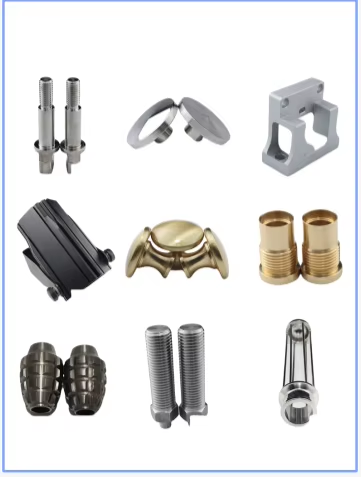
Core CNC Machining Capabilities and Machine Types
Today's CNC or Computer Numerical Control services can achieve really tight tolerances around 0.001 inches in many different industries when they combine sophisticated software programs with highly accurate mechanical parts. What makes these machines so valuable is their ability to handle complicated cutting paths automatically, which means factories can run nonstop producing everything from lightweight aluminum brackets used in airplanes all the way to strong titanium pieces needed for medical devices inside people's bodies. According to latest data from the Machining Systems industry report released this year, roughly 7 out of 10 manufacturers have started relying on CNC technology not just for making prototypes but also for full scale production runs because it works consistently well across various materials.
Types of CNC Machines: Lathes, Milling Machines, and Routers
- Lathes rotate workpieces against cutting tools, ideal for cylindrical parts like hydraulic fittings
- Milling machines use multi-point tools to shape stationary blocks into engine blocks or mold cavities
- Routers specialize in wood, plastics, and soft metals for signage or cabinetry with intricate patterns
Advanced Systems: Plasma, Laser Cutters, EDM, Drilling, and Grinding Machines
Plasma and laser systems achieve 0.004" kerf widths for sheet metal fabrication, while EDM (Electrical Discharge Machining) shapes hardened tool steels with 5µm accuracy. CNC grinding extends service life for high-wear components like turbine blades through surface finishes below 0.2µm Ra.
Vertical vs. Horizontal CNC Milling: Applications and Advantages
| Feature | Vertical Mills | Horizontal Mills |
|---|---|---|
| Workpiece | Automotive transmission cases | Aerospace bulkheads |
| Key Benefit | Easier chip evacuation | Multi-sided machining |
| Accuracy | ±0.001" | ±0.0005" |
Horizontal configurations reduce production time by 30% for complex parts through simultaneous 4-axis operations.
Multi-Axis Machining and Complex Geometries in High-Precision Production
5-axis CNC systems tilt cutting tools at 45°-120° angles, machining turbine impellers and spinal implants in single setups. Recent studies show 9-axis hybrid machines achieve 97% first-pass yield rates for Formula 1 suspension components requiring 15+ angled features.
Key CNC Machining Services: From Prototyping to High-Volume Production
CNC Turning and Milling: Foundational Services for Rotational and Flat-Surface Components
CNC turning and milling are really the foundation of today's precision manufacturing world. The numbers back this up too - around 78% of metalworking jobs get done using these methods, per that latest report from the Machining Industry in 2023. When it comes down to what each does best, turning is great for making those round parts we see everywhere, think shafts and bushings that spin inside lathes. Milling takes care of different needs altogether, cutting flat surfaces and intricate shapes needed for things like engine blocks. Both techniques work well with materials ranging from aluminum and stainless steel to some pretty tough engineering plastics. They can achieve amazing accuracy too, sometimes within just 0.01 mm or about 0.0004 inches. That level of precision makes these machining processes absolutely critical for building reliable automotive transmissions and important structural parts used in aircraft construction.
5-Axis Machining for Intricate Part Designs and Reduced Setup Times
The latest 5 axis machining systems allow tools to move at the same time across all five axes, cutting down on setup time by about 40% when compared to traditional 3 axis machines according to research published in the Precision Engineering Journal last year. These advanced systems make it possible to produce intricate parts like turbine blades that have complicated airfoil designs as well as orthopedic implants which need those natural looking contours. Because the tools can reach every angle around the workpiece, there are fewer visible machining marks left behind. Surface finishes often get down below Ra 0.8 microns too, making them perfect for things like lenses and surgical instruments where smoothness really matters.
CNC Swiss Machining for Small, High-Precision Parts in Medical and Electronics Industries
Swiss style CNC lathes can make incredibly tiny parts down to about half a millimeter across, with positioning accuracy within plus or minus one micron. That kind of precision is exactly what medical device manufacturers need to meet all those tough regulatory requirements. The machines handle everything from insulin pump components to those tiny connector pins for microelectronics, keeping concentricity tight at around 0.005 mm throughout production runs. What really makes these machines stand out is their guide bushing system which provides rock solid stability even when cutting through tricky materials such as titanium alloys and PEEK thermoplastics commonly found in implantable medical devices.
Rapid Prototyping vs. Production Machining: Matching Service to Project Needs
When it comes to prototyping services, what really matters is how fast they can get things done while still being flexible enough to make changes. Many companies now offer working prototypes within three days using stuff like aluminum 6061 to check if designs actually work as intended. Production machining takes a different approach altogether though. The main goals here are getting parts out quickly and keeping costs down. Take one major car parts maker who cut their part prices nearly two thirds once they switched from just making prototypes to running full scale CNC operations according to Automotive Manufacturing Quarterly last year. What we're seeing these days are these mixed methods where manufacturers can smoothly move from small batches right up to massive orders over 100 thousand pieces without having to completely reconfigure their machines each time.
Industry-Specific Applications of CNC Services
Aerospace: Precision Components Under Extreme Conditions
CNC services enable aerospace manufacturers to machine turbine blades and engine components from titanium alloys and nickel-based superalloys, maintaining ±0.0004" tolerances under operational temperatures exceeding 1,200°C. These capabilities ensure compliance with AS9100D standards for flight-critical parts exposed to extreme stress and vibration cycles.
Automotive: Durable, Repeatable Parts for Performance and Safety Systems
Automotive CNC applications focus on high-volume production of transmission housings and brake calipers from hardened steel and aluminum composites. Advanced turning centers achieve 98% material utilization rates while holding ±0.001" positional accuracy across batches of 500,000+ parts essential for reliability in crash safety systems.
Medical Devices: Biocompatible Materials and Micron-Level Accuracy Requirements
Medical-grade CNC machining produces FDA-compliant surgical tools and titanium spinal implants with surface finishes under 8 µin Ra. Leading providers utilize 5-axis systems to maintain ±5µm tolerances on PEEK polymer components, ensuring compatibility with sterilization protocols and long-term biocompatibility, as confirmed by industry analyses.
Precision, Materials, and Quality Standards in CNC Services
Achieving Tight Tolerances and Superior Surface Finishes
Today's CNC services can hit dimensional accuracy down to about +/− 0.0025 mm (+/− 0.0001") when making those really important parts for aerospace and medical applications. The better machines out there use things like thermal compensation tech along with super detailed feedback systems so they stay accurate batch after batch. Most shops certified under AS9100 standards are already running statistical process control these days just to keep up with MIL-STD-120G requirements. And don't forget about multi-axis machining centers which take surface finish to another level entirely. These setups regularly produce surfaces smoother than Ra 0.4 microns thanks to smart toolpath programming and those fancy diamond coated cutting tools that last forever.
Material Versatility: Metals, Plastics, and Composites in CNC Processing
CNC services support 150+ engineering-grade materials, including:
| Material Class | Common Applications | Surface Finish Options |
|---|---|---|
| Aerospace aluminum | Flight control systems | Chemical film, anodizing |
| Surgical stainless | Implantable devices | Electropolishing, passivation |
| PEEK thermoplastics | Semiconductor fixtures | Laser marking, bead blasting |
This flexibility enables single-source production of multi-material assemblies while maintaining ±0.01 mm positional accuracy.
CMM Inspection and Quality Assurance Protocols for Defect-Free Output
Top manufacturers rely on automated coordinate measuring machines (CMMs) that can repeat measurements down to 1.7 microns when checking those intricate part shapes. Some recent research from last year found something pretty interesting too. When companies started combining their CMM measurement data with smart AI systems that automatically tweak production settings, they saw scrap rates drop by almost two thirds compared to what happened during regular manual checks. And let's not forget about the requirements from major suppliers. Pretty much every Tier 1 supplier out there demands first article inspections these days. These FAIs typically involve logging well over 100 different dimensions across parts, all following those strict ASME Y14.5 guidelines. Makes sense really, since nobody wants quality issues slipping through the cracks.
Value-Added Services and Automation in Modern CNC Operations
Design for Manufacturability (DFM) Consultations to Reduce Costs and Delays
Leading CNC service providers integrate DFM analysis during quoting, identifying potential production bottlenecks before programming begins. This proactive approach eliminates 85% of design-related revisions (2024 Machining Industry Report), shortening timelines and minimizing material waste. Engineers collaborate with clients to optimize wall thicknesses, simplify geometries, and select cost-effective alloys without sacrificing functionality.
Custom Finishing, Assembly, and Post-Processing Options
Modern shops offer integrated surface treatment solutions alongside core CNC services, including:
- Aesthetic finishes: Media blasting (80-120 µin Ra) or custom anodizing
- Functional coatings: Teflon impregnation for bearing surfaces
- Secondary operations: CNC-turned threads mated with milled flanges
These value-added capabilities reduce supply chain complexity, with some providers achieving 30% faster turnaround through in-house post-processing.
Smart Factories and Automation: Robotics and Industry 4.0 in CNC Services
Recent analyses show over 60% of manufacturers now deploy collaborative robots (cobots) for lights-out machining of high-volume components. Key advancements include:
| Technology | Impact | Adoption Rate (2025 Projection) |
|---|---|---|
| IoT-enabled CNC | Real-time tool wear monitoring | 78% |
| Automated pallet changers | 24/7 operation capacity | 65% |
This shift toward Industry 4.0 allows CNC providers to sustain ±0.0002" tolerances across 10,000-part batches while reducing energy consumption by 19% (2023 Sustainable Machining Initiative).
FAQ
What are CNC machines used for?
CNC machines are used for precision manufacturing in various industries, including aerospace, automotive, medical devices, and electronics.
What types of CNC machines are there?
Common types of CNC machines include lathes, milling machines, routers, plasma and laser cutters, EDM machines, drills, and grinders.
How do CNC services achieve high precision?
CNC services use sophisticated software, accurate mechanical parts, and technologies like thermal compensation and detailed feedback systems to achieve tight tolerances.
What materials can CNC machines process?
CNC machines can process metals, plastics, and composites, supporting over 150 engineering-grade materials.
What is rapid prototyping in CNC services?
Rapid prototyping refers to creating quick and flexible working models or prototypes to test design functionality before full-scale production.
Table of Contents
- Core CNC Machining Capabilities and Machine Types
-
Key CNC Machining Services: From Prototyping to High-Volume Production
- CNC Turning and Milling: Foundational Services for Rotational and Flat-Surface Components
- 5-Axis Machining for Intricate Part Designs and Reduced Setup Times
- CNC Swiss Machining for Small, High-Precision Parts in Medical and Electronics Industries
- Rapid Prototyping vs. Production Machining: Matching Service to Project Needs
- Industry-Specific Applications of CNC Services
- Precision, Materials, and Quality Standards in CNC Services
- Achieving Tight Tolerances and Superior Surface Finishes
- Material Versatility: Metals, Plastics, and Composites in CNC Processing
- CMM Inspection and Quality Assurance Protocols for Defect-Free Output
- Value-Added Services and Automation in Modern CNC Operations
- FAQ