
 EN
EN



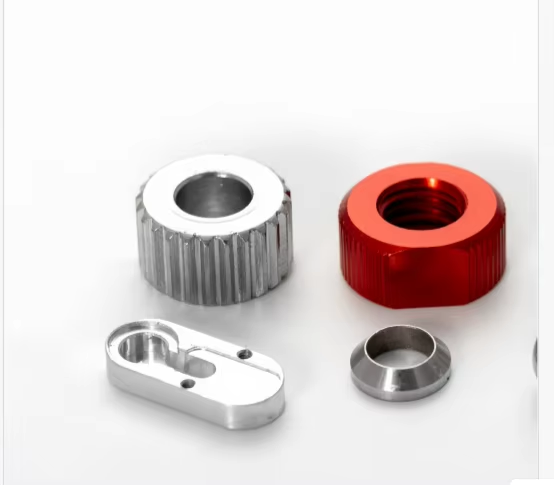
Superior Precision and Accuracy in CNC Machining
The Demand for Micro-Level Tolerances in Modern Manufacturing
Aerospace manufacturing and medical device production have pushed tolerance requirements down to under 0.001mm these days. These specs are simply impossible to achieve with traditional hand-operated machines. Take satellite navigation components or hip implant parts as examples they need precision measurements within just one micron of error. Contemporary computer numerical control (CNC) equipment handles this level of accuracy thanks to features like closed-loop feedback mechanisms and linear scale tracking systems. This allows manufacturers to maintain exact dimensions even when working at microscopic scales where tiny variations can make all the difference between success and failure in critical applications.
How Digital Programming Enables Sub-Micron Accuracy
CNC machining achieves ±0.0005mm repeatability through G-code automation combined with adaptive toolpath algorithms. These systems automatically adjust for thermal expansion and tool wear, maintaining sub-micron accuracy across more than 500 production cycles without manual intervention.
Case Study: Aerospace Components with <0.001mm Tolerance
A turbine blade manufacturer reduced scrap rates by 74% after adopting 5-axis CNC machines equipped with real-time laser measurement. The process maintained ±0.0008mm positional accuracy across 20,000 blades, fully complying with AS9100 aerospace certification standards.
Growing Use in Medical Device Manufacturing Due to Precision Needs
The medical CNC machining market grew 28% from 2020 to 2023, driven by demand for spinal implants requiring surface roughness below Ra 0.4µm. This level of precision reduces biological rejection risks and supports seamless integration between implant and bone tissue.
Strategy: CAD/CAM Integration for Consistent, High-Tolerance Output
Top manufacturers use model-based definition (MBD) workflows, where CAD simulations directly generate optimized toolpaths. This eliminates translation errors inherent in manual programming, reducing dimensional variances by 63% compared to traditional methods (Journal of Advanced Manufacturing, 2023).
Automation, Repeatability, and Integration with Industry 4.0
The Rise of Lights-Out and Unattended Manufacturing
CNC machining enables full production automation through closed-loop systems and robotic tool changers, allowing facilities to operate without human supervision. This capability aligns with Industry 4.0 principles reported by IoT Business News (2025), where 64% of automotive plants now run overnight shifts with zero operators.
G-Code Automation Reduces Human Intervention and Variability
Pre-programmed G-code ensures ±0.005 mm repeatability across batches exceeding 10,000 parts. By eliminating manual adjustments, this digital-first approach reduces human error by 89% compared to conventional lathe operations, based on 2023 manufacturing benchmarks.
Case Study: Automotive Supplier Achieving 99.8% Part Uniformity
A European transmission component manufacturer achieved 99.8% dimensional compliance across 450,000 units annually using 5-axis CNC cells with automated CMM verification. Scrap rates dropped from 7.2% to 0.4%, while inspection labor costs were cut by 60%.
Trend: IoT and Predictive Maintenance in CNC Systems
Smart CNC controllers integrate IoT sensors to monitor spindle vibration (RMS thresholds < 2.5 mm/s) and tool wear patterns. Manufacturers using predictive maintenance report 22% fewer unplanned downtimes and 18% longer tool life compared to time-based maintenance schedules.
Optimizing Batch Production for Maximum Uptime
Advanced CNC systems use real-time torque telemetry to automatically optimize feed rates and toolpaths, reducing cycle times by 14–19% in high-mix environments. In aerospace fastener manufacturing, this has enabled equipment utilization rates as high as 93%.
Faster Production Cycles and Time-to-Market Advantages
Modern manufacturers increasingly rely on CNC machining to accelerate production timelines without compromising quality. The technology effectively bridges prototyping and mass production, offering a competitive edge in fast-moving markets.
Meeting Demand for Rapid Prototyping and Fast Iteration
CNC systems allow teams to transform CAD models into functional prototypes within hours—50% faster than traditional methods. This speed supports rapid design validation and material testing, enabling up to five prototype iterations per week. Leading automotive suppliers now complete 3–5 cycles weekly, doubling the pace of manual processes.
High-Speed Spindles and Multi-Axis Movement Boost Efficiency
Equipped with 24,000 RPM spindles and synchronized 5-axis motion, modern CNC machines can machine complex components in a single setup. Eliminating manual repositioning removes a major bottleneck, with aerospace manufacturers reporting 68% faster milling times for titanium parts compared to 3-axis alternatives.
Case Study: Consumer Electronics Firm Cuts Cycle Time by 40%
A global tech company reduced smartwatch casing production from 14 days to 8.5 days by deploying multi-axis CNC clusters. Automated tool changers and adaptive coolant protocols enabled uninterrupted 24/5 operation, achieving <0.1mm variance across 10,000 units.
AI-Optimized Toolpaths Accelerate Machining Without Sacrificing Quality
AI-driven software analyzes material hardness, tool wear, and vibration data to generate efficient cutting paths. These systems reduce non-productive air-cutting time by 22% while maintaining micron-level accuracy—essential for medical implant producers requiring <0.05mm consistency across bone screw batches.
Complex Geometries and Multi-Axis Machining Capabilities
Increasing Need for Intricate Designs in Industrial Applications
Aerospace manufacturing, power generation sectors, and medical device companies are all asking for components featuring complex internal passages, naturally shaped forms, and extremely precise fitting surfaces these days. Take turbine blades for instance they must have those special curved surfaces to cut down air resistance during operation. Medical implants present another challenge altogether, needing surface textures that actually encourage bone growth around them. Standard three axis CNC machines just can't handle these kinds of designs very well. Most shops end up doing several separate machining operations which creates problems with part alignment and adds weeks onto production schedules. This is why so many manufacturers are looking at alternative fabrication methods when dealing with such intricate requirements.
5-Axis CNC Machines Enable Single-Setup Production of Complex Parts
With 5 axis CNC machining, tools can move across X, Y, Z plus two rotational axes at once, giving complete access to those tricky undercuts and angled parts all in a single setup. What does this mean for production? Cycle times drop somewhere between 30 to 50 percent when compared with traditional 3 axis machines. A recent 2024 research project found something pretty impressive too. When working on curved surfaces, these advanced setups hit ±0.005 mm tolerances about 89 percent quicker than what we see with multiple steps needed in standard 3 axis operations. For manufacturers looking to boost efficiency while maintaining quality standards, this kind of performance difference matters a lot.
Case Study: Turbine Blade Fabrication Using Simultaneous 5-Axis Milling
One major player in the energy sector saw its scrap rate plummet by nearly two-thirds when they made the switch to 5-axis CNC machining for those intricate gas turbine blades. Their new system can actually create blades measuring around 1.2 meters long while maintaining an incredibly smooth finish of just 0.008 mm roughness. What's really impressive though are those cooling channels cut at precisely 75 degrees angle something traditional manufacturing techniques simply couldn't achieve before. The financial impact was substantial too. Each individual unit became $1,200 cheaper to produce, and whole batches came off the line almost three weeks faster than before the upgrade. These improvements represent a game-changer for manufacturers dealing with complex aerospace components.
Balancing Cost vs. Capability in Multi-Axis CNC Adoption
Although 5-axis machines carry 25–40% higher upfront costs than 3-axis models, their ability to minimize secondary operations delivers significant long-term savings. A 2023 analysis found that manufacturers recoup investments within 18 months via 43% labor savings and 31% reductions in material waste. Prioritizing high-complexity parts ensures optimal ROI without unnecessary capital strain.
Cost-Effectiveness, Scalability, and Long-Term ROI of CNC Machining
Reducing Per-Unit Costs in High-Volume Manufacturing
CNC machining lowers per-unit costs in high-volume production through automation and minimal material waste. Industry analyses show CNC operations reduce expenses by 35–50% compared to manual methods, with payback periods typically under 24 months for manufacturers producing over 10,000 units annually.
Lower Labor and Material Waste Improve Overall ROI
Automated CNC systems cut direct labor costs by 60–75% and achieve near-zero scrap rates through CAM-verified toolpaths. These efficiencies boost annual ROI by 18–22% across sectors, with energy monitoring tools further enhancing resource optimization.
Case Study: Fastener Manufacturer Triples Output with CNC Automation
A North American fastener producer increased output by 200% within eight months of adopting multi-axis CNC systems. The upgrade sustained ±0.005mm tolerances across 2.5 million annual units while reducing per-part labor costs by 68%, achieving full return on investment in just 14 months.
Cloud-Based Monitoring for Efficient Large-Scale CNC Operations
Manufacturers using IoT-enabled CNC networks report 92–95% equipment utilization through real-time spindle load tracking and predictive alerts. This integration cuts unplanned downtime by 40% in facilities operating 50+ machines, enabling scalable growth without proportional increases in staffing.
Frequently Asked Questions
What is the typical accuracy level of CNC machining?
CNC machining typically achieves accuracy levels of under 0.001mm, thanks to advancements in technology such as adaptive toolpath algorithms and closed-loop systems.
How do CNC machines help reduce waste in manufacturing?
By automating processes and utilizing CAM-verified toolpaths, CNC machines minimize material waste, achieving near-zero scrap rates and reducing per-part production costs.
Can CNC machining be integrated with Industry 4.0 technologies?
Yes, CNC systems can integrate with Industry 4.0 principles, including IoT sensors and predictive maintenance, to enhance efficiency and reduce unplanned downtimes.
What are the cost implications of adopting 5-axis CNC machines?
While 5-axis CNC machines have higher upfront costs, they offer significant long-term savings by reducing secondary operations and enhancing production efficiency.
Table of Contents
-
Superior Precision and Accuracy in CNC Machining
- The Demand for Micro-Level Tolerances in Modern Manufacturing
- How Digital Programming Enables Sub-Micron Accuracy
- Case Study: Aerospace Components with <0.001mm Tolerance
- Growing Use in Medical Device Manufacturing Due to Precision Needs
- Strategy: CAD/CAM Integration for Consistent, High-Tolerance Output
- Automation, Repeatability, and Integration with Industry 4.0
- Faster Production Cycles and Time-to-Market Advantages
- Complex Geometries and Multi-Axis Machining Capabilities
- Cost-Effectiveness, Scalability, and Long-Term ROI of CNC Machining
- Frequently Asked Questions