
 EN
EN



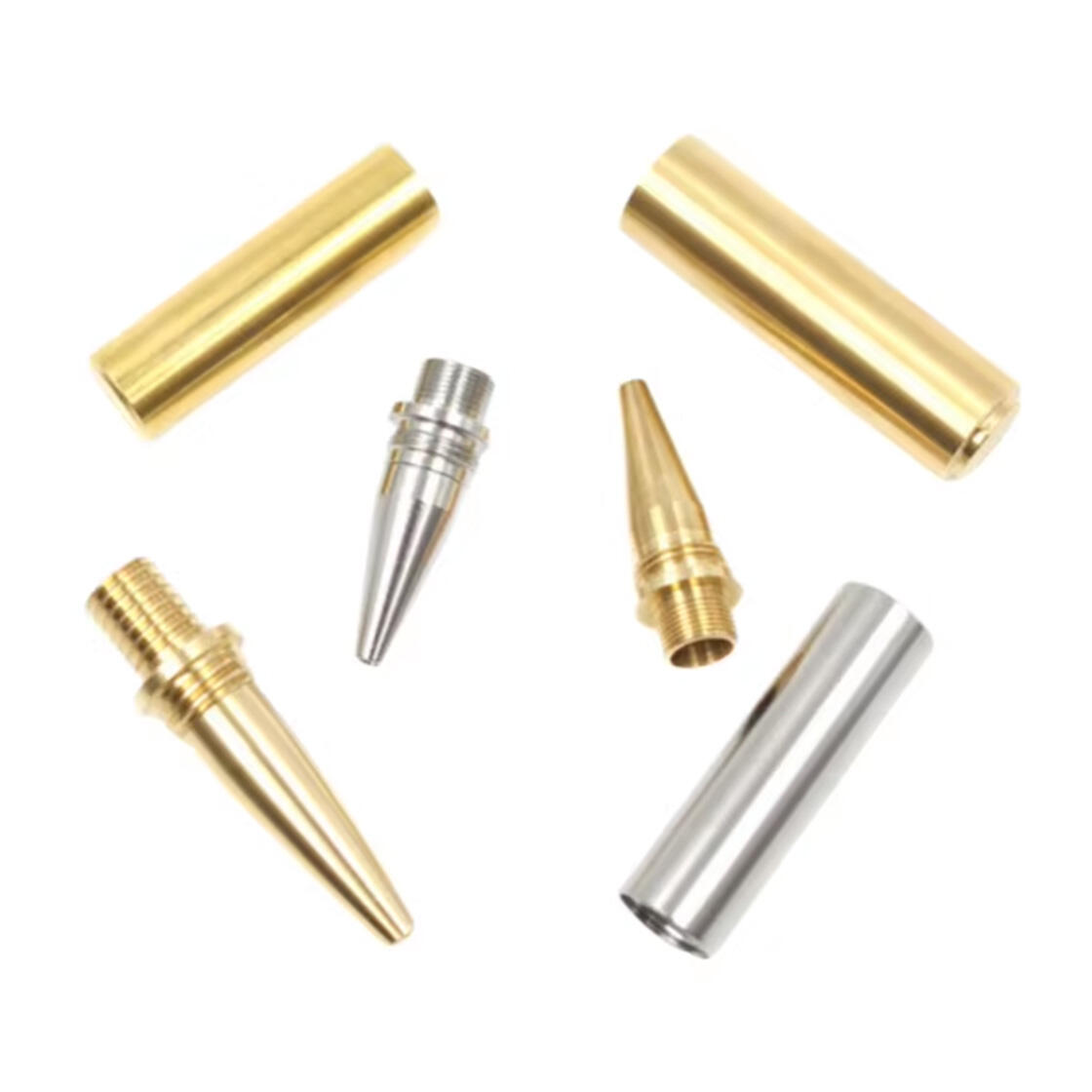
Core Quality Standards Governing CNC Manufacturing
ISO 9001, AS9100, and IATF 16949: Systemic Frameworks for CNC Quality Assurance
Three foundational standards form the backbone of quality assurance in CNC manufacturing. ISO 9001 establishes universal quality management principles—requiring documented processes, leadership accountability, and continuous improvement cycles. AS9100, tailored for aerospace, adds stringent safety-critical controls, enhanced traceability, and configuration management. IATF 16949 addresses automotive-specific needs—including embedded software validation, advanced product quality planning (APQP), and robust supply chain oversight. All three mandate risk-based thinking through Failure Mode Effects Analysis (FMEA) and full documentation across material sourcing, programming, machining, inspection, and delivery. Certification is achieved via rigorous third-party audits of the manufacturer’s quality management system (QMS), ensuring standardized, repeatable execution across every CNC operation.
How Compliance Drives Consistency, Cost Efficiency, and Customer Trust in CNC Manufacturing
Adherence to these standards delivers measurable operational advantages. Certified shops achieve 28% higher production consistency through enforced process controls, statistical monitoring, and structured corrective actions. Standardization directly lowers costs: scrap and rework reduction saves mid-sized facilities an average of $740k annually (Ponemon Institute, 2023). Real-time digital documentation enables rapid root-cause analysis when deviations occur—cutting investigation time by up to 60%. Customers increasingly treat certification as a non-negotiable prerequisite: 78% of procurement teams require ISO 9001 compliance for precision components, with AS9100 or IATF 16949 often mandated in aerospace and Tier-1 automotive supply chains. This trust translates into tangible business outcomes—certified manufacturers secure 40% more repeat contracts in regulated sectors, transforming quality assurance from a compliance obligation into a strategic revenue enabler.
Precision Engineering Fundamentals in CNC Manufacturing
Tolerances, Surface Finish (Ra/Rz), and GD&T: Defining Measurable Quality Benchmarks
Precision engineering establishes objective, quantifiable benchmarks that distinguish acceptable CNC output from mission-critical performance. Dimensional tolerances—such as ±0.0005" for hydraulic manifolds or ±0.001" for turbine blades—directly govern functional fit, sealing, and dynamic balance. Surface finish specifications like Ra (arithmetic average roughness) and Rz (maximum peak-to-valley height) ensure performance integrity: Ra < 0.4 µm minimizes wear in rotating assemblies, while Rz < 3.2 µm supports consistent lubricant retention. Geometric Dimensioning and Tolerancing (GD&T) provides the essential mathematical language for specifying form, orientation, runout, and location—replacing ambiguous notes with unambiguous, datum-referenced controls. By eliminating interpretation errors between design intent and shop-floor execution, GD&T prevents an estimated $1.2M in annual rework for high-mix precision shops (NADCA, 2023).
| Measurement Type | Key Metrics | Industry Impact |
|---|---|---|
| Dimensional | ±0.0005" tolerance | Ensures interchangeability in assemblies |
| Surface Finish | Ra < 0.4 µm, Rz < 3.2 µm | Reduces wear in rotating components |
| Geometric | Flatness ≤ 0.1mm | Critical for sealing surfaces |
Design for Manufacturability: Optimizing Parts for CNC Capabilities and Constraints
Design for Manufacturability (DFM) bridges the gap between theoretical geometry and practical CNC execution. Effective DFM avoids features incompatible with standard tool access—such as deep undercuts or internal corners smaller than 1× tool diameter—and specifies minimum wall thicknesses to prevent chatter-induced distortion. Integrating toolpath strategy early—like selecting optimal stepovers, ramp angles, and high-efficiency milling patterns—reduces cycle times by 30% while extending endmill life. Material selection guided by machinability indices (e.g., AISI 1215 over 4140 for non-structural parts) further mitigates deflection, heat buildup, and surface defects. This proactive alignment slashes prototyping iterations by 65% (SME, 2023), shifting focus from “can it be made?” to “how can it be made best?”
Real-Time Quality Control and Metrology in CNC Manufacturing
CMM, Laser Scanning, and In-Process Inspection: Balancing Speed, Accuracy, and Traceability
Modern CNC operations rely on integrated metrology—not as a final gate, but as a continuous feedback loop. Coordinate Measuring Machines (CMM) deliver micron-level verification of critical dimensions and GD&T callouts, while laser scanners capture complex organic surfaces without contact or fixturing. In-process inspection systems—embedded via touch probes, laser micrometers, or vision-guided sensors—monitor tool wear, thermal drift, and dimensional stability during machining, enabling immediate parameter adjustments before defects propagate. This real-time approach reduces escape defects by 30–50% compared to post-process sampling alone (Journal of Manufacturing Systems, 2023). Crucially, automated data logging feeds statistical process control (SPC) dashboards and satisfies AS9100 traceability requirements—eliminating manual transcription while preserving audit-ready records at every stage.
Machine Reliability and Process Stability in CNC Manufacturing
Calibration Protocols, Tool Life Management, and Surface Integrity Preservation
Consistent precision begins with machine reliability. Rigorous calibration protocols—performed per ISO 230-1 and 230-2—verify geometric accuracy (e.g., squareness, straightness, volumetric error) and integrate thermal compensation to counteract environmental drift. Proactive tool life management uses spindle load monitoring, acoustic emission sensing, or predictive algorithms to replace cutters before wear compromises dimensional fidelity or surface finish. Simultaneously, surface integrity preservation applies metallurgically informed practices: optimized coolant flow rates and pressure, controlled cutting speeds to avoid white-layer formation, and stress-relieving finishing passes—all aimed at preventing microcracks, residual tensile stresses, and subsurface damage that degrade fatigue life. Together, these disciplines reduce unplanned downtime by up to 40% (Machining Efficiency Report, 2023) and ensure components meet functional requirements for corrosion resistance, load-bearing capacity, and long-term reliability.
FAQ
What are the key quality standards for CNC manufacturing?
The key quality standards include ISO 9001 for universal quality management, AS9100 for aerospace-specific needs, and IATF 16949 for automotive specifications.
How do these standards impact CNC manufacturing?
These standards lead to higher production consistency, cost reductions, and increased customer trust through enforced process controls and certifications required by procurement teams.
What is Design for Manufacturability (DFM) in CNC?
DFM involves designing parts that align with CNC capabilities, avoiding complex geometries, and optimizing toolpaths to reduce production time and costs.
Why is real-time quality control important in CNC manufacturing?
Real-time quality control allows for immediate adjustments and reduces defects, maintaining high precision by using tools like CMMs and laser scanning during the manufacturing process.
What techniques ensure machine reliability in CNC manufacturing?
Machine reliability is ensured through calibration protocols, proactive tool life management, and practices that preserve surface integrity and prevent damage.