
 EN
EN



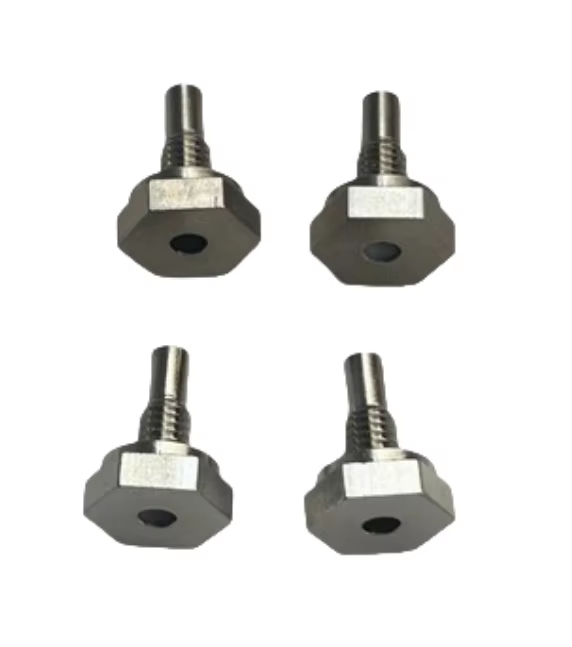
Accelerated Prototyping Through CNC Machining Speed and Flexibility
Reduced Setup Time and Faster Design Iteration Cycles with CNC
CNC machining eliminates traditional tooling, enabling direct production from CAD files—cutting setup time from weeks to hours. Engineers modify designs entirely in software, avoiding physical retooling and compressing iteration cycles by up to 65% versus conventional methods. Multi-axis systems machine complex functional prototypes in under 48 hours, while optimized toolpaths minimize material waste during revisions—enhancing responsiveness without sacrificing fidelity.
CNC Machining vs. Additive Manufacturing: Speed, Lead Time, and Responsiveness for Functional Prototypes
For medium-complexity functional prototypes, CNC machining delivers metal and plastic parts 3–5 days faster than industrial 3D printing. It achieves superior dimensional stability (±0.005 mm) and production-grade surface finishes without post-processing delays. Unlike layered AM parts, CNC-machined components exhibit isotropic material properties—critical for load-bearing validation and reducing failure risk. Crucially, CNC lead times remain consistent regardless of geometry complexity, whereas AM speed declines with part density. This reliability makes CNC the preferred choice for urgent design verification requiring mechanical fidelity.
Precision Engineering: Why CNC Machining Delivers Functional Prototype Accuracy
Tight tolerances (±0.005 mm) and surface finish consistency for validation-ready parts
CNC machining delivers micron-level precision essential for functional validation—achieving tolerances under ±0.005 mm and surface roughness as low as Ra 0.1 µm. This ensures dimensional repeatability for high-stakes applications like aerospace seals and medical implants, where deviations directly impact performance. Subtractive processing preserves full material integrity, avoiding thermal stresses or anisotropic weaknesses found in additive alternatives. As a result, prototypes accurately replicate form, fit, and function under real-world loads—enabling first-article validation without tooling constraints and reducing iteration cycles by 30–50% compared to non-machined alternatives. Over 78% of mission-critical prototypes rely on CNC for this reason.
Key precision advantages:
- Metrology-grade accuracy (±0.005 mm) for high-stress components
- Surface roughness control (Ra 0.1–1.6 µm) tailored to application needs
- Material-specific optimization of cutting parameters for metals and plastics
- First-article validation without mold or sintering artifacts
Cost-Effective CNC Prototyping Without Tooling or Minimum Order Constraints
Eliminating upfront tooling investment for low-volume, high-fidelity prototypes
CNC machining removes the need for expensive molds or fixed tooling—bypassing $10k–$50k upfront investments typical of injection molding. This allows functional prototypes to be produced in days, not months, dramatically accelerating validation—especially for batches under 50 units. Redesign costs drop 60–75% compared to tooling-dependent processes, while production-grade materials ensure fidelity across iterations.
Material and process efficiency: optimizing CNC prototyping ROI across metals and plastics
CNC maximizes material yield through near-net shape cutting—unlike additive manufacturing, which incurs 15–30% waste. High-value materials like aluminum 6061 ($25/kg) and PEEK ($300/kg) are used efficiently, reducing per-part costs by 40% for quantities under 100—while maintaining ±0.005 mm tolerances. This combination of material versatility, waste reduction, and precision delivers measurable ROI within just 2–3 prototype iterations—even for complex geometries.
Material Versatility and Real-World Functional Fidelity in CNC Prototypes
CNC machining processes engineering thermoplastics—including PEEK and Delrin—as well as high-strength metals like aerospace aluminum and medical-grade titanium. This breadth enables exact replication of final production material properties, supporting rigorous functional testing under real-world conditions. Unlike rapid prototyping alternatives, CNC-milled parts retain 100% material density and structural integrity—ensuring accurate validation of stress resistance, thermal stability, and biocompatibility. Automotive brake prototypes, for example, endure heat cycling equivalent to road use; medical instruments meet certification-ready biocompatibility standards. Such fidelity identifies interference fits, fatigue points, and assembly issues early—reducing late-stage rework costs by up to 30%. With no material compromises, CNC prototypes behave identically to end-use parts during both assembly checks and operational simulations.
FAQ
What is CNC machining?
CNC (Computer Numerical Control) machining is a manufacturing process where pre-programmed software dictates the movement of factory tools and machinery. This technology allows for the production of intricate parts by removing material from a workpiece using tools like lathes, routers, mills, and grinders.
How fast can CNC machining produce prototypes?
CNC machining can produce complex functional prototypes in under 48 hours, which is significantly faster than traditional methods and often quicker than some forms of additive manufacturing.
What materials can be used in CNC machining?
CNC machining can work with a wide range of materials, including various metals like aluminum and titanium, as well as engineering-grade plastics such as PEEK and Delrin.
Why choose CNC machining over additive manufacturing?
While both have their advantages, CNC machining offers superior dimensional stability, isotropic material properties, and consistent lead times, especially beneficial for functional prototypes that require mechanical fidelity and precise validation.
Is CNC machining cost-effective for low-volume production?
Yes, CNC machining is cost-effective for low-volume production as it eliminates the need for expensive tooling or molds, reducing initial setup costs and making it ideal for small batches of less than 50 units.