
 EN
EN



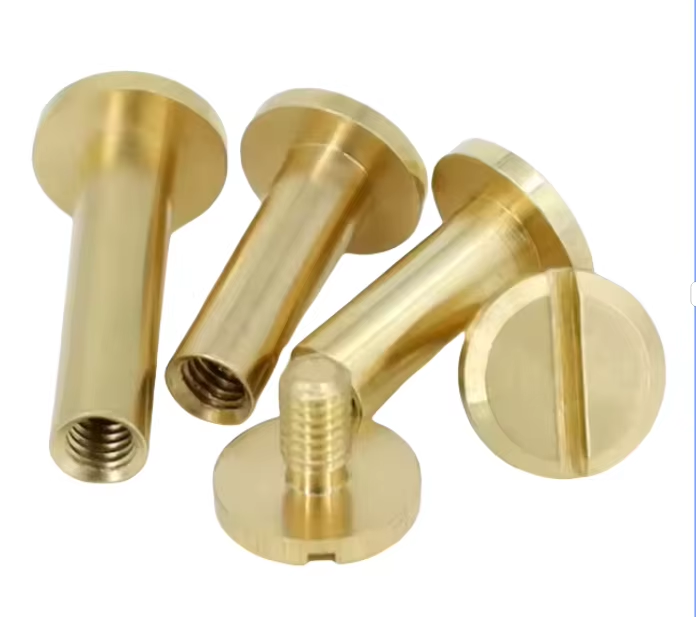
Precision Engineering for Intricate Geometries
Achieving Sub-0.001-Inch Tolerances in Complex Features
Modern CNC machining achieves sub-0.001-inch tolerances on intricate geometries—such as curved turbine blade surfaces and internal channels in medical implant housings—through rigid machine architectures, vibration-dampening materials, and micro-tooling with sub-micron runout control. Adaptive toolpath strategies, powered by advanced CAM software, dynamically compensate for material spring-back and tool deflection by simulating cutting forces and optimizing feed rates in real time. High-speed, high-stiffness spindles maintain stability during complex contouring, while statistical process control (SPC) data confirms 99.8% compliance with AS9100 geometric dimensioning standards across production batches. This eliminates manual finishing steps, cutting total cycle time by 40% and ensuring flawless mating surfaces without post-process intervention.
Thermal Compensation and Real-Time Probing for Consistent Accuracy
Thermal drift—especially critical when machining low-conductivity alloys like titanium—is actively mitigated through integrated thermal sensors and laser-based in-process probing. Embedded algorithms adjust toolpaths by 5–50 microns in real time to counteract expansion-induced errors. Simultaneously, touch-trigger or laser probes verify key dimensions every 10–15 cycles without part removal, detecting deviations beyond ±0.0003 inches before they propagate. This closed-loop verification feeds directly into SPC dashboards, enabling immediate corrections that sustain CpK values above 1.67. The result is repeatable accuracy for mission-critical components—including fuel injectors and orthopedic joint interfaces—even during uninterrupted, high-volume runs exceeding 10,000 units.
Multi-Axis CNC Machining and Seamless Digital Workflow Integration
End-to-End CAD-to-Part Continuity for Design-Faithful Complex Components
Seamless digital continuity—from native CAD model to finished part—ensures design fidelity across complex organic geometries, internal lattices, and thin-walled structures. Integrated CAM platforms translate parametric models directly into validated toolpaths, eliminating manual programming errors and preserving ±0.005-inch dimensional accuracy from virtual prototype to physical component. Virtual machining simulations pre-validate tool access, collision avoidance, and surface finish outcomes, preventing costly physical rework. For aerospace impellers and patient-specific implants, this workflow guarantees batch-to-batch consistency and accelerates time-to-part by up to 40%, according to industry benchmarking studies.
5-Axis Simultaneous vs. Indexed Machining: Optimizing Access and Surface Quality
The choice between simultaneous and indexed (3+2) 5-axis strategies hinges on functional requirements and feature topology:
- Simultaneous machining maintains continuous motion across all five axes during cutting—ideal for sculpted surfaces like turbine blades or anatomically contoured bone implants. It delivers Ra 0.4 µm finishes natively, eliminating secondary polishing and reducing setups by 80% for organic parts.
- Indexed (3+2) machining locks the workpiece at optimal angular orientations before executing high-rigidity 3-axis cuts—best suited for prismatic features requiring aggressive material removal, such as engine blocks or bracket flanges. It delivers superior positional accuracy for angular holes and faces where dynamic axis motion could compromise stiffness.
Both methods extend CNC capability beyond traditional constraints, but their selection reflects deliberate trade-offs between surface integrity, rigidity, and programming complexity.
Proven Repeatability Across High-Volume Complex Part Production
Statistical Process Control in CNC Machining for Medical Implant Housings
Statistical process control transforms CNC machining of life-critical components—like titanium spinal implant housings—into a predictable, auditable science. Real-time monitoring of tool wear, spindle load, thermal drift, and in-process probe measurements feeds automated control charts that detect micron-level deviations before non-conformities occur. For 10,000-unit batches, this system sustains sub-0.001-inch geometric tolerances while meeting FDA-designated critical-to-quality (CTQ) requirements. When paired with machine learning–enhanced anomaly detection, leading manufacturers achieve near-zero defect rates without sacrificing throughput—proving that regulatory rigor and scalable repeatability are not mutually exclusive in precision medical manufacturing.
Scalable Efficiency and Material Flexibility in Custom CNC Machining
From Prototype to Full-Scale Titanium Turbine Vane Production Without Retooling
Custom CNC machining enables true scalability: a single validated program transitions seamlessly from first-article prototype to full-scale production of titanium turbine vanes—no retooling, no process recalibration, and no tolerance degradation. Across thousands of units, ±0.005-inch dimensional fidelity is maintained through adaptive toolpath optimization, which also reduces Grade 5 titanium waste by over 20% compared to legacy methods. A single platform handles diverse materials—from 7075 aluminum and PEEK polymer to Inconel 718—without hardware modification, supporting rapid response to supply chain shifts and mixed-product demand. In high-mix environments, this flexibility drives per-unit cost reductions of up to 35%, proving that precision, volume, and material agility can coexist within one cohesive manufacturing strategy.
FAQs
What are sub-0.001-inch tolerances?
Sub-0.001-inch tolerances refer to the precision measurement range that is less than 0.001 inches, enabling high precision in machining intricate geometries.
How does thermal compensation improve machining accuracy?
Thermal compensation involves adjusting toolpaths based on real-time thermal data to counteract expansion-induced errors, ensuring consistent machining accuracy even under varying temperatures.
What is the difference between simultaneous and indexed 5-axis machining?
Simultaneous 5-axis machining involves continuous motion across all five axes simultaneously, ideal for complex surfaces. In contrast, indexed machining locks the workpiece in place for certain operations, providing increased rigidity for specific cuts.
How does statistical process control benefit CNC machining?
Statistical process control in CNC machining allows for real-time monitoring and automatic corrections, maintaining precision and consistency in high-volume production runs.