
 EN
EN


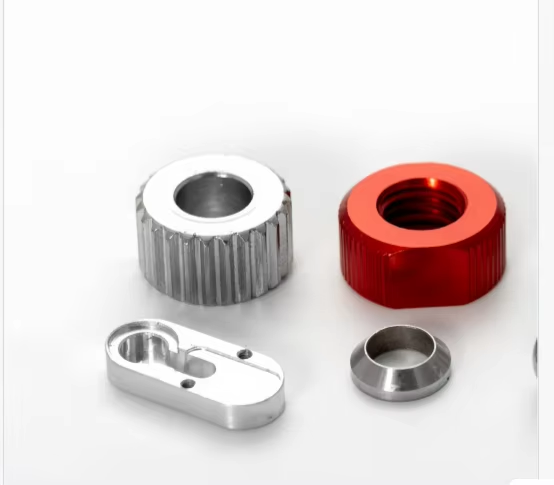
The CNC Precision Control Loop: From G-Code to Micro-Accurate CNC Parts
Micro-accurate CNC parts begin with G-code—the deterministic instructional language defining toolpaths, spindle speeds, and feed rates. Modern CNC controllers execute these commands while integrating real-time sensor feedback to form a closed-loop system that maintains dimensional stability within ±5 µm, a threshold essential for aerospace, medical, and optical components.
How Real-Time Feedback Regulates Spindle Speed, Feed Rate, and Depth of Cut
Integrated sensors monitor tool position, vibration, cutting forces, and thermal expansion—feeding live data to PID-based control algorithms. When chatter emerges or temperature rise threatens dimensional drift, the controller autonomously adjusts spindle speed, feed rate, or depth of cut. These microsecond-level corrections sustain surface finishes under 0.8 Ra and hold tolerances consistently within ±5 µm across production runs.
Why Adaptive Control Prevents Micro-Deviations from Compromising CNC Parts Integrity
Adaptive control goes beyond reactive correction: it uses predictive analytics on sensor streams to anticipate degradation before it impacts geometry. For instance, evolving vibration harmonics can signal incipient tool wear; the system responds by preemptively reducing depth of cut—preserving part integrity without interrupting cycle time. As validated in high-volume aerospace production, this approach reduces scrap rates by 97% (Manufacturing Journal, 2023), transforming precision from a static specification into a dynamically sustained outcome.
Foundational Setup for CNC Parts Precision: Tooling, Workholding, and Kinematic Alignment
Precision in CNC parts manufacturing rests on three interdependent pillars: optimized tooling geometry, rigid workholding, and exact kinematic alignment. Together, they suppress the mechanical and thermal disturbances that otherwise propagate micron-level deviations into finished parts.
How Rigidity and Kinematic Coupling Eliminate Vibration-Induced Tolerance Drift
Vibration remains a primary source of tolerance drift—capable of introducing errors exceeding ±5 µm in unstable setups. Kinematic coupling addresses this at the root: by constraining the workpiece using precisely positioned, non-redundant contact points, it eliminates over-constraint while fully neutralizing all six degrees of freedom. Paired with high-stiffness hydraulic or shrink-fit tool holders, this method dampens harmonic resonance by up to 90% (Precision Engineering Journal, 2023), enabling consistent dimensional stability within ±2 µm and surface finishes below 0.8 Ra—even during extended high-speed operations.
Why Proper Workholding Reduces First-Piece Rejection by Over 70% in High-Tolerance CNC Parts
Inadequate fixturing accounts for 58% of first-article failures in sub-10 µm tolerance applications. Modular vises, vacuum chucks, and custom-engineered jigs ensure repeatable, low-variance positioning—delivering less than 5-µm positional deviation across setups. This reliability cuts first-piece rejection by 71%, accelerates job changeovers by 40%, and directly supports throughput for complex, high-mix CNC parts without sacrificing fidelity.
Digital Precision Pipeline: CAD/CAM, G-Code Determinism, and CNC Controller Intelligence
How CAM Post-Processors Convert Geometric Intent into Repeatable CNC Parts Commands
CAD/CAM software bridges digital design and physical output through deterministic toolpath generation. When a CAD model specifies geometric tolerances under ±0.005 mm, certified post-processors translate those requirements into unambiguous machine instructions—applying tool deflection compensation, corner smoothing, and kinematic look-ahead logic. For example, a turbine housing requiring 74 angled micro-holes is converted into motion paths that account for both machine dynamics and material behavior. This eliminates interpretive ambiguity responsible for 23% of historical dimensional deviations in complex CNC parts (Journal of Manufacturing Systems, 2023).
Why G-Code Ambiguity Is a Leading Cause of Dimensional Drift in CNC Parts Production
G-code remains a critical vulnerability—not due to its core standard, but because of inconsistent implementation of manufacturer-specific extensions. Take G64, the path-blending command: one controller may prioritize contour fidelity, another speed—introducing ±4 µm deviations in turbine blade profiles where surface continuity defines aerodynamic performance. Such inconsistencies contribute to 18% of scrap in high-tolerance aerospace machining (ASME Tolerance Analysis, 2024). Today’s intelligent controllers mitigate this risk through real-time kinematic validation—flagging or rejecting ambiguous or non-deterministic code before execution.
Verifying and Sustaining Precision: In-Process Metrology and Statistical Process Control for CNC Parts
How Real-Time Sensor Feedback Enables Adaptive Corrections Within ±0.5 µm Uncertainty
Embedded metrology—such as laser interferometers, strain gauges, and piezoelectric force sensors—provides continuous, sub-micron resolution feedback during machining. This enables adaptive corrections that maintain dimensional accuracy within ±0.5 µm (0.0005 mm) while cutting. Unlike open-loop systems, which assume ideal conditions, closed-loop in-process control compensates mid-cycle for variables like thermal growth, material stress relaxation, or progressive tool wear—reducing scrap by 37% and ensuring that every part meets spec as manufactured, not just as inspected.
Why Traditional Off-Line Inspection Fails to Capture Thermal and Dynamic Drift in CNC Parts
Post-process inspection occurs after the part has cooled, relaxed, and been removed from the machine—rendering it blind to transient effects that define true functional accuracy. Friction-induced thermal gradients, dynamic spindle runout, and residual stresses all distort geometry during machining but dissipate before offline measurement. Consequently, dimensionally unstable parts—passing final inspection—may later warp, bind, or fail under operational load. Industry studies confirm thermal and dynamic drift account for over 60% of undetected failures in high-precision applications (ASME Tolerance Analysis, 2024), underscoring why in-process verification is no longer optional—it’s foundational to CNC parts integrity.
FAQ
What is G-code in CNC machining?
G-code is the programming language used to control CNC machines, defining toolpaths, spindle speeds, and feed rates to produce precise parts.
How does real-time feedback improve CNC machining accuracy?
Real-time feedback uses sensor data to adjust machining parameters like spindle speed and feed rate, maintaining high accuracy by correcting errors as they arise.
What role does workholding play in CNC precision?
Workholding ensures the workpiece is positioned accurately and stably, minimizing vibrations and positional deviations to improve precision and reduce first-piece rejection rates.
Why is in-process metrology important for CNC parts manufacturing?
In-process metrology provides continuous feedback during machining, allowing adjustments that maintain part accuracy and prevent deviations caused by thermal and dynamic variables.
Table of Contents
- The CNC Precision Control Loop: From G-Code to Micro-Accurate CNC Parts
- Foundational Setup for CNC Parts Precision: Tooling, Workholding, and Kinematic Alignment
- Digital Precision Pipeline: CAD/CAM, G-Code Determinism, and CNC Controller Intelligence
- Verifying and Sustaining Precision: In-Process Metrology and Statistical Process Control for CNC Parts
- FAQ