
 EN
EN



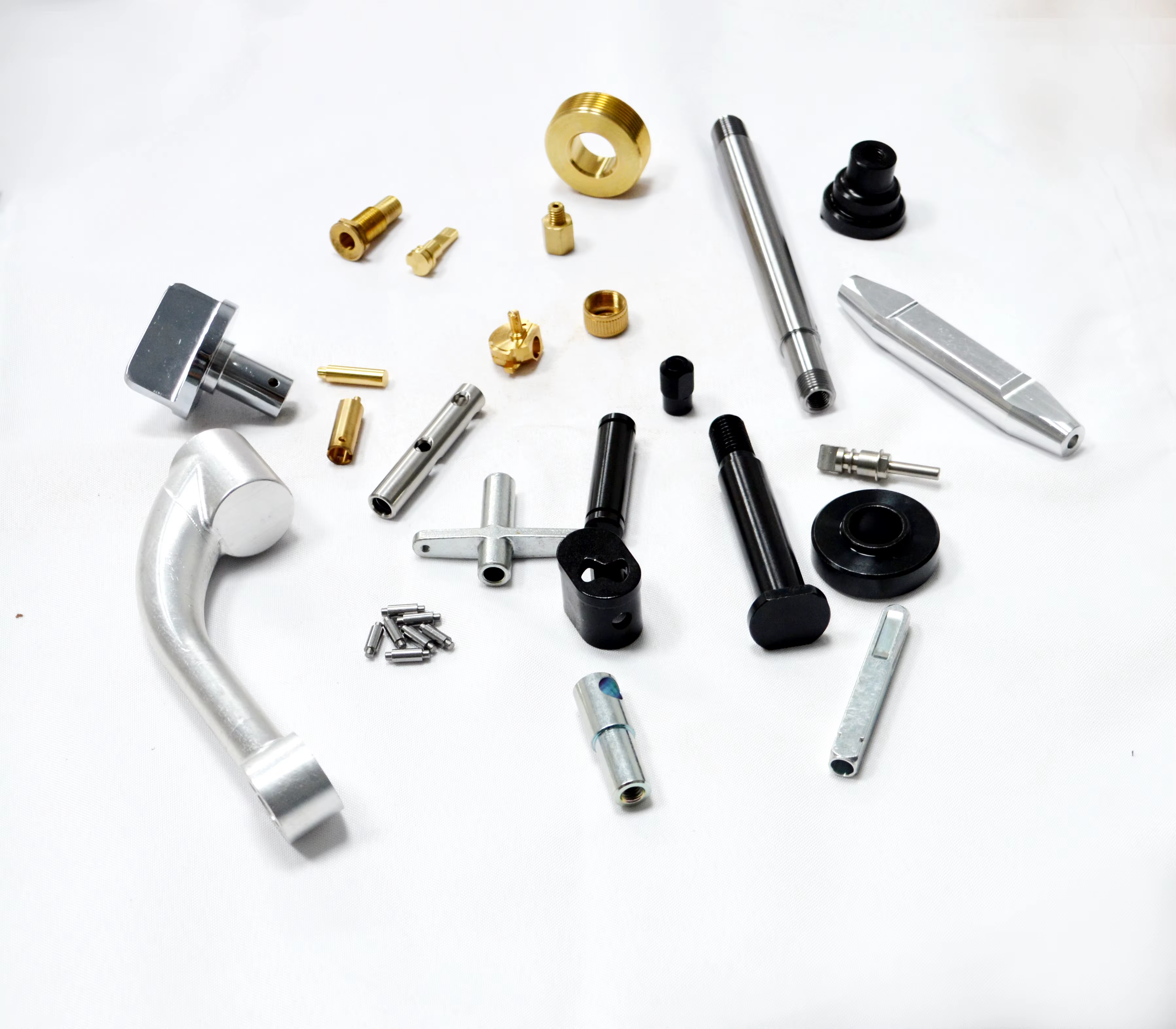
Define Precision Requirements and Tolerances for Your Custom CNC Parts
Understanding CNC Precision Machining Fundamentals
CNC machining, which stands for Computer Numerical Control, relies on computer guided tools to make parts that repeat consistently and accurately something really important when making components for things like airplanes, medical gear, and semiconductor machines. The top shelf systems can hit tolerances down to about plus or minus 0.0002 inches (that's 5 microns), but most day to day applications work just fine with around plus or minus 0.001". This gives manufacturers a good balance between how well it works, what it costs, and whether it can actually be made. According to actual shop floor stats, getting the right tolerances sorted out upfront cuts down on failures in the field by roughly 30% for those really important systems where there's no room for error. And here's the thing nobody tells new engineers often enough defining exactly what level of precision is needed before locking in the design saves everyone headaches later on. If specs get changed after the fact or left vague, production gets delayed sometimes doubled in time just because nobody knew what they wanted until it was too late.
Selecting Realistic Tolerances: From ±0.0002" to ±0.002" Based on Function
When picking tolerances, focus on what actually needs to happen in the field rather than what specs say it can do. Going too tight adds costs nobody wants and delays projects left and right. On the flip side, being too loose means parts won't fit properly, things break down faster, or worse yet, safety issues pop up. Most plastic boxes and metal brackets don't need anything tighter than plus or minus 0.002 inches. That keeps prices reasonable while still getting the job done. But when dealing with moving parts that spin together, seals that need to hold pressure, or precision mounts for machinery, we usually bump it up to 0.001 inch tolerance. These tighter specs keep everything running smoothly over time. For super critical stuff like sensors in airplanes or medical devices implanted in people's bodies, manufacturers sometimes go all out with 0.0002 inch tolerances. Just know this costs about 20 to 30 percent more because machines run slower, special tools are needed, and every single part has to be checked with those expensive coordinate measuring machines. Check out the table here to see which tolerance range works best for different situations.
| Tolerance Range | Typical Applications | Cost Impact |
|---|---|---|
| ±0.0002" to ±0.0005" | Aerospace sensors, medical implants | High (20–30% premium) |
| ±0.001" | Automotive gears, precision bearings | Moderate (5–15% increase) |
| ±0.002" | General brackets, housings | Low (base cost) |
Prioritize functional interfaces over cosmetic surfaces—and remember: tighter isn’t always better. A well-justified ±0.001" spec on a bearing bore delivers more value than an unjustified ±0.0005" on a non-functional flange.
Optimize Design and Material Selection for High-Precision CNC Parts
Matching Materials to Performance Needs: Aluminum, Stainless Steel, Titanium, and Engineering Plastics
What material gets selected has a huge impact on how stable parts stay dimensionally, how easy they are to machine, and their reliability over time. Take Aluminum 6061-T6 for instance. This alloy strikes a great balance between strength, conducts heat well, and machines pretty easily which is why it shows up so much in aircraft structures and cooling systems. Stainless steel options such as grades 303 and 316 stand out because they resist corrosion and won't react with bodily fluids making them go-to choices for medical tools and equipment that handles liquids. Then there's Titanium Grade 5 (Ti-6Al-4V). It packs incredible strength while keeping weight down, perfect when every gram matters in aerospace or racing applications. But working with titanium isn't without challenges. Its poor thermal properties mean tools get worn out faster during machining operations. Engineering plastics like PEEK hold their shape even when temperatures fluctuate wildly and offer good electrical insulation properties. However, these materials need careful handling during machining processes. Machinists have to set up proper feeds and speeds and ensure rigid fixturing to prevent deformation or overheating that could ruin the part entirely.
Key selection criteria include:
- Stress loads >50 ksi – hardened alloys (e.g., 17-4 PH stainless, Ti-6Al-4V)
- Exposure to harsh chemicals or saline environments – 316 stainless, Hastelloy, or PEEK
- Weight constraints – aluminum, magnesium, or carbon-fiber composites
- Electrical isolation or RF transparency – PEEK, Ultem, or Vespel
Always confirm material certifications (e.g., mill test reports) and verify supplier experience with your chosen grade—especially for exotic alloys or high-purity polymers.
Design for Manufacturability (DFM) Best Practices to Achieve Tight Tolerances Without Over-Engineering
Effective DFM minimizes cost and risk while preserving precision—by designing with manufacturing constraints, not against them. Standardize general tolerances to ±0.005" unless functionally justified, reserving ±0.001" (or tighter) only for mating features, bearing seats, or alignment surfaces. Simplify geometry to support rigidity and tool access:
- Use internal corner radii ≥ 1/3 cavity depth to avoid sharp tool interference
- Keep pocket depth-to-diameter ratios ≤ 4:1 to limit tool deflection
- Maintain metal wall thicknesses ≥ 0.8 mm to prevent vibration-induced chatter
- Consolidate features into single setups (e.g., combine drilling, milling, and tapping) where possible
Implementing these methods typically cuts down production cycles by around thirty percent while also boosting the rate of successful first passes. When designing parts, swapping out those extra radius features for simple edge chamfers makes cleaning up much easier after machining and gives tools better room to work. Surface finish specs like Ra 0.8 microns should really only be called out when absolutely necessary for things like creating proper seals, reducing friction over time, or achieving specific visual standards. Good design for manufacturing isn't about cutting corners at all costs. Instead, it's about knowing exactly where to apply strict tolerances so resources aren't wasted on areas that don't actually impact final product performance.
Leverage Advanced CNC Technologies and Quality Assurance for Sub-Thousandth Accuracy
High-Precision CNC Capabilities: 5-Axis Milling, Swiss-Type Turning, and Micro-Machining
Achieving sub-thousandth-inch accuracy consistently requires purpose-built platforms—not just skilled operators. Three technologies stand out for demanding custom CNC parts:
- 5-axis milling machines complex contours (e.g., turbine blades, impellers) in a single setup, eliminating re-fixturing errors and holding ±0.0005" across compound angles. Thermal compensation and granite machine beds further stabilize dimensions.
- Swiss-type turning excels at slender, high-aspect-ratio parts (e.g., catheter shafts, endoscopic tools), maintaining ±0.0002" diameter control through guide bushing support and synchronized live-tooling.
- Micro-machining, using sub-0.1 mm carbide tools and spindles exceeding 60,000 RPM, produces features <0.004" with ±0.0001" repeatability—ideal for optical mounts, microfluidic channels, and MEMS components.
All three adhere to ASME B5.54 standards for geometric accuracy and rely on vibration-dampened structures and real-time thermal monitoring to sustain performance across production runs.
Robust Quality Control: In-Process Monitoring, CMM Validation, and Statistical Process Control
Precision without verification is speculative. Reliable high-tolerance output demands layered, automated quality assurance:
- In-process monitoring (via load cells, acoustic emission, or laser probes) detects tool wear or chatter mid-cycle—reducing scrap by up to 30% before defects propagate.
- CMM validation, performed on statistically sampled or 100% of critical features, confirms dimensional conformance down to 0.00005"—with traceable calibration to NIST standards.
- Statistical Process Control (SPC) tracks key process variables (e.g., spindle load, surface finish trends) in real time, enabling proactive adjustments before tolerance drift occurs. SPC-driven shops demonstrate 50% fewer escapes and 99.98% batch conformance versus conventional methods (Journal of Manufacturing Systems, 2024).
| Technology | Tolerance Range | Key Applications |
|---|---|---|
| 5-Axis Milling | ±0.0005" | Turbine blades, impellers |
| Swiss-Type Turning | ±0.0002" | Surgical instruments |
| Micro-Machining | ±0.0001" | Optical components |
This integrated framework ensures consistency—not just compliance—with your defined precision requirements.
Partner with a Trusted CNC Manufacturer for Reliable Custom CNC Parts
Choosing the right partner matters a lot when it comes to meeting those precision targets. Look for suppliers who have ISO 9001:2015 certification first off since this standard really does cut down defects significantly according to recent studies from Quality Digest back in 2023 showing reductions around 30%. But don't stop there at just checking boxes. Make sure they actually know what they're doing with materials like titanium grade 5 or PEEK resin. Ask about experience with manufacturing techniques such as Swiss machining or multi-axis contouring operations. Get concrete evidence through actual samples they've produced before, read through their audit documentation, talk to previous clients if possible. Also check whether their quality control system involves regular measurements during production using coordinate measuring machines, proper statistical process control throughout manufacturing, and keep an eye on how they handle equipment calibration against official national standards too.
Working together matters just as much as anything else does. Good partners don't wait until problems show up on the shop floor; instead they give designers heads up about issues with tolerances, walls that might be too thin for production, or fixtures that won't work properly long before any metal gets cut. When manufacturers catch these things early, companies save money on costly redesigns and get products into customers' hands faster. Manufacturers who know their stuff, communicate well, and really care about quality aren't just making parts for the sake of it. They actually help protect what makes a product successful in the marketplace, ensure compliance with all those regulations that seem to change constantly, and keep the whole supply chain running smoothly even when unexpected challenges pop up.
FAQ
What is the importance of defining precision requirements before starting production?
Defining precision requirements before production ensures that specifications are clear from the start, reducing delays and costs by preventing unnecessary changes during manufacturing.
How do material choices affect CNC precision machining?
The choice of material affects dimensional stability, machinability, and performance. For instance, aluminum is balanced in strength and machinability, while titanium is strong and lightweight but harder to work with.
What are the benefits of using advanced CNC technologies like 5-axis milling?
Advanced CNC technologies like 5-axis milling allow for more complex and precise parts by eliminating refixturing errors and maintaining tight tolerances, enhancing overall manufacturing efficiency.
How can a trusted CNC manufacturer assure the quality of custom CNC parts?
A trusted CNC manufacturer ensures quality through certifications like ISO 9001:2015, experience with specific materials and techniques, and robust quality control systems such as in-process monitoring and CMM validation.