
 EN
EN



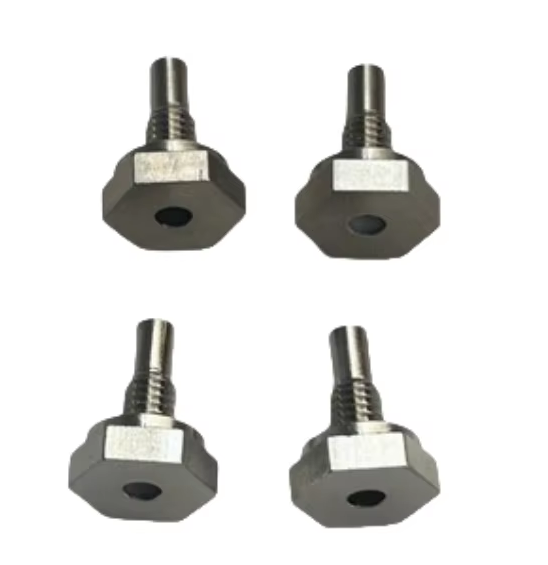
Mission-Critical Safety: How Micron-Level CNC Part Accuracy Prevents Catastrophic Failure
Failure Modes from Sub-Micron Deviations in Load-Bearing Components
In aerospace and medical device manufacturing, sub-micron deviations in CNC parts carry catastrophic risks. A dimensional error as small as 0.01 mm can initiate stress concentrations in turbine blades or spinal implants—triggering cascading failures. For aircraft actuators, surface roughness exceeding Ra 0.4 µm accelerates wear and increases the risk of hydraulic system leakage. Similarly, bone screws with thread pitch deviations beyond ±5 microns may loosen post-implantation, necessitating revision surgery. These outcomes stem from three interrelated failure mechanisms: vibrational harmonics in unbalanced components, premature fatigue initiation at micro-crack sites, and compromised sealing integrity due to imperfect mating surfaces. Rigorous tolerance control—often below 5 microns—ensures uniform load distribution, eliminates stress risers, and preserves functional reliability across mission-critical applications.
AS9100, NADCAP, and FDA-Required Traceability for CNC Parts
Compliance with AS9100 (Aerospace Quality Management Systems), NADCAP (National Aerospace and Defense Contractors Accreditation Program), and FDA 21 CFR Part 820 mandates end-to-end traceability for CNC parts. These frameworks require documented verification of material certifications, dimensional inspection reports confirming conformance to ±0.0005″ tolerances, toolpath validation logs, and surface finish measurements via profilometers. For implantable devices, FDA regulations further require biocompatibility testing per ISO 10993 and sterile packaging verification. NADCAP’s process-specific accreditations—including heat treatment and non-destructive testing—ensure defects are identified before assembly. This multi-layered traceability delivers auditable evidence that every component meets its design intent, directly supporting liability mitigation and patient or passenger safety.
Aerospace Applications: Demanding Tolerances and Complex Geometries for CNC Parts
Turbine Blades, Actuators, and Structural Frames Requiring ±0.0005″ Tolerances
Aerospace components operate under extreme mechanical stress, thermal cycling, and fatigue loads—making dimensional precision non-negotiable. Deviations beyond ±0.0005″ (12.7 µm) in turbine blades or actuator links can induce vibration, uneven load distribution, or premature structural failure. In critical engine and hydraulic systems, tolerances tighten further—to ±0.0002″ and even ±0.0001″—demanding rigid process control, real-time thermal compensation, and highly optimized toolpaths. Achieving this level of accuracy relies on precision CNC systems equipped with advanced fixturing, in-process metrology, and closed-loop feedback. The result is consistent performance across the full aircraft lifecycle, from ground test through decades of operational service.
5-Axis CNC Machining of Integrated Cooling Channels and Thin-Wall Features
Modern airframe and engine designs increasingly rely on thin-walled structures (under 0.030″) and internal cooling channels—geometries inaccessible to conventional 3-axis milling. 5-axis CNC machining resolves this by enabling continuous, multi-angle tool access in a single setup. This eliminates repositioning errors, ensures wall thickness uniformity, and allows precise creation of curved cavities and deep, complex internal passages. For structural frames and housings, 5-axis capability guarantees that contours, holes, and transitional radii align precisely with CAD-defined intent—supporting both weight reduction and fuel efficiency without compromising strength or thermal management.
Medical Device Applications: Biocompatibility, Consistency, and Regulatory Compliance for CNC Parts
Machining Titanium, PEEK, and Nitinol with Surface Integrity Preservation
Medical implants and surgical instruments require CNC parts fabricated from advanced biomaterials—titanium, PEEK, and Nitinol—each presenting distinct machining challenges. Titanium demands low cutting speeds and high coolant flow to avoid work hardening and subsurface microcracks; PEEK requires sharp tools and controlled feeds to prevent thermal degradation and surface smearing; Nitinol necessitates precise thermal management to preserve its superelastic properties during machining. Surface integrity is paramount: burrs, microcracks, and embedded contaminants must be eliminated to satisfy ISO 10993 biocompatibility requirements. Typical tolerances for these applications reach ±0.001″ (±25.4 µm), ensuring accurate anatomical fit, long-term in vivo stability, and resistance to degradation across repeated sterilization cycles.
FDA 21 CFR Part 820 and ISO 13485 Requirements for CNC Parts Production
Regulatory compliance forms the foundation of medical device CNC manufacturing. FDA 21 CFR Part 820 and ISO 13485 mandate comprehensive documentation, validated processes, and full lot traceability—from raw material receipt through final inspection. Every production step must capture material certifications, machine parameters, and inspection data to build a complete device history record. Manufacturers must demonstrate statistical repeatability: the 10,000th part must conform to the same tight tolerance band as the first. Audits verify equipment calibration, operator training, and corrective action effectiveness. Adherence to these standards ensures each implant, instrument, or diagnostic component delivers predictable safety and performance—directly safeguarding patient health.