
 EN
EN



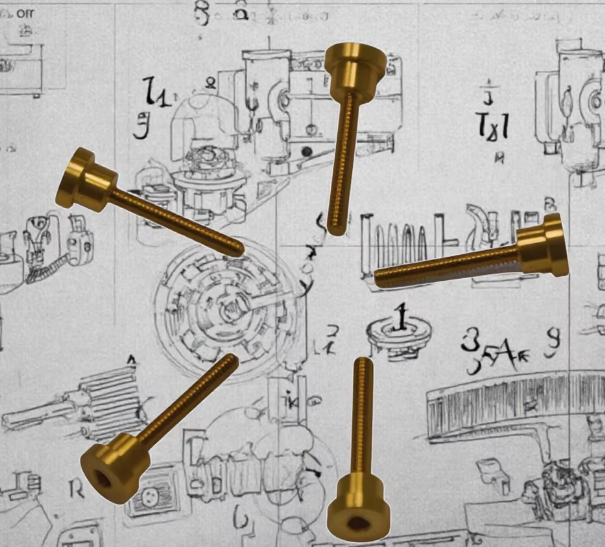
Unmatched Precision and Repeatability at Scale
Achieving ±0.0001-Inch Tolerances: Machine Rigidity, Calibration, and Thermal Compensation
CNC machining achieves aerospace-grade ±0.0001-inch tolerances through three interdependent engineering pillars: rigidity, calibration, and thermal management. Cast-iron machine frames and high-precision linear guides resist vibration and deflection under sustained cutting loads—critical for maintaining positional accuracy across thousands of parts. Laser interferometry and ballbar testing calibrate axes and spindles to micron-level traceability, ensuring toolpaths execute as programmed. Meanwhile, real-time thermal compensation systems monitor spindle and axis temperatures, dynamically adjusting coordinates to offset heat-induced expansion. Together, these features deliver dimensional stability unattainable with manual machining or additive processes—especially at scale.
Why Consistency Improves with Volume: Reduced Cost per Part Through Stable Process Windows
Unlike many manufacturing methods, CNC consistency increases with production volume—a counterintuitive but well-documented advantage. Extended runs allow machines to reach thermal equilibrium, eliminating early-run drift caused by component warm-up. Tool wear becomes predictable and gradual, enabling feed/speed adjustments or tool-offset updates before deviations affect part geometry. As setup costs amortize across more units, per-part expenses drop—industry benchmarks show up to 40% reduction in high-volume runs. This reinforces a virtuous cycle: stable process windows lower scrap rates, which in turn supports tighter control over future batches. The result is not just cost efficiency, but improved repeatability at scale—making CNC the definitive choice for precision mass production.
Automation and Lights-Out Manufacturing for High-Volume CNC Machining
Seamless Unattended Operation: Tool Changers, Pallet Systems, and Bar Feeders
Lights-out manufacturing unlocks continuous, operator-free CNC operation—enabling chip-to-chip machining for hours or days. Automated tool changers, pallet systems, and bar feeders form the operational backbone: pallets allow rapid workpiece swapping while the machine cuts; bar feeders advance raw stock automatically in turning applications; and tool changers maintain optimal cutting conditions without intervention. These systems maximize spindle utilization—often doubling effective capacity without adding labor or floor space. The outcome is faster throughput, consistent part quality across shifts, and significantly reduced per-part labor costs—freeing skilled personnel for higher-value tasks like process optimization and exception handling.
Real-World Uptime Data: 87% Availability in Tier-1 Automotive CNC Cells (AMT 2023)
Real-world performance confirms the reliability of automated CNC. A 2023 study by the Association For Manufacturing Technology (AMT) found that tier-1 automotive suppliers running lights-out CNC cells achieved 87% machine availability—meaning spindles were actively cutting metal nearly 9 out of every 10 scheduled hours. This far exceeds the 60–70% typical of manually supported operations and reflects the convergence of robust hardware design, predictive maintenance algorithms, and stabilized process windows. For manufacturers, this translates into dependable output, stronger on-time delivery performance, and the agility to commit confidently to demanding customer schedules.
Built-In Quality Assurance Across Mass Production Runs
In-Machine Probing, DFM-Validated Toolpaths, and Closed-Loop Adaptive Control
Quality in high-volume CNC is no longer inspected—it’s engineered in. Three integrated technologies make this possible: in-machine probing performs real-time measurement of critical features mid-cycle, flagging deviations before completion and eliminating post-process inspection lag. DFM-validated toolpaths are generated using simulation-driven programming that proactively avoids issues like chatter, deflection, or collision—reducing trial-and-error setups and first-article failures. Closed-loop adaptive control continuously monitors cutting forces and acoustic signatures, automatically adjusting feed rates and spindle speeds to compensate for tool wear or material variation. According to peer-reviewed research in the Journal of Manufacturing Systems (2022), this integrated approach reduces scrap by 40% compared to traditional QC methods—while sustaining ±0.0002-inch dimensional stability across 10,000+ part runs.
| Quality Technology | Function | Impact on Production |
|---|---|---|
| In-Machine Probing | Real-time dimensional verification | Eliminates post-machining QC lag |
| DFM-Validated Toolpaths | Pre-emptive error prevention | Reduces trial-and-error setups |
| Closed-Loop Adaptive Control | Dynamic parameter adjustment | Neutralizes tool wear effects |