
 EN
EN



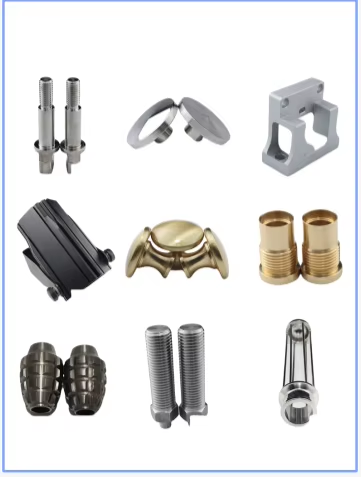
Evaluate Industry Experience and Core Expertise in CNC Services
When looking for a good CNC service provider, it pays to check how long they've been around and what kind of expertise they bring to the table. Companies that have spent more than twenty years in the CNC machining business tend to make about a third fewer mistakes during production runs than those who are just starting out according to Machinery Today from last year. That experience factor really matters when assessing whether a manufacturer can deliver consistent results. Specialization within specific industries makes all the difference too. Top manufacturers often focus on particular sectors where requirements get much stricter. Think aerospace components or medical device parts that need extremely tight tolerances down to 0.005 inches or better, plus meet strict biocompatibility regulations for materials used inside the human body.
Assess years of operation and industry specialization in cnc services
Prioritize vendors with proven experience in your target sector. Automotive part suppliers typically require ISO/TS 16949 compliance, while defense contractors need ITAR-registered facilities. A 2023 industry survey found that 78% of CNC buyers achieved better outcomes by selecting providers with at least five years of relevant expertise.
Review workforce skill level and training programs
Top CNC services employ certified machinists, such as those holding NIMS credentials, and invest in structured training. Documented upskilling—averaging 40+ annual training hours per technician—is linked to a 22% higher first-pass yield rate (Precision Machining Journal 2024).
Examine portfolio and past project examples for relevance
Review case studies highlighting:
- Complex geometries with <50µm positional accuracy
- Multi-material assemblies (e.g., aluminum-stainless steel hybrids)
- High-volume runs (10,000+ units) maintaining ≤0.1% defect rates
These benchmarks reflect technical proficiency and process control under real-world conditions.
Analyze continuous improvement practices in machining operations
Leading shops implement Six Sigma methodologies and real-time monitoring. Facilities using AI-driven predictive maintenance reduce machine downtime by 18% (Advanced Manufacturing Report 2024), ensuring consistent quality across production cycles.
Verify Quality Certifications and Compliance Standards
Confirm Compliance with ISO 9001 and Other Relevant Quality Management Systems
Certifications are foundational to reliable CNC manufacturing. Companies with ISO 9001 certification experience 32% fewer quality defects than non-certified peers (ASQ 2023). Prioritize providers with both ISO 9001 and sector-specific certifications such as ISO 13485 for medical devices or IATF 16949 for automotive applications. Validate all certifications through accredited registrars’ databases to ensure authenticity.
Inspect Documentation Processes and Audit Readiness
Strong documentation systems enable regulatory compliance and traceability. Look for:
- Traceable process control records (PCRs) for CNC machine calibration
- Material certificates aligned with AMS or ASTM standards
- Complete audit trails for toolpath revisions and operator sign-offs
Top-tier providers maintain over 98% document retrieval success during unannounced audits, reflecting disciplined quality management.
Compare Adherence Across International Standards (AS9100, IATF 16949)
Global supply chains require adherence to specialized standards:
| Standard | Industry Focus | Critical Requirement |
|---|---|---|
| AS9100D | Aerospace | FAIR (First Article Inspection Reports) |
| IATF 16949 | Automotive | Process Sign-Off Sheets (PSW) |
| ISO 13485:2016 | Medical | Biocompatibility Documentation |
Achieving AS9100 compliance typically takes aerospace-focused CNC providers 18–24 months, underscoring its stringent requirements for supplier oversight and risk management.
Assess Technical Capabilities: CAD/CAM Integration and Multi-Axis Machining
Determine Integration of Advanced CAD/CAM Software in CNC Services
Seamless CAD/CAM integration reduces programming errors by up to 30% in CNC workflows (Industry Report 2024). Leading providers use software with automated toolpath generation and feature recognition to optimize cycle times and material efficiency, accelerating time-to-market without sacrificing precision.
Evaluate 3-Axis, 4-Axis, and 5-Axis Machining Availability
Multi-axis capabilities determine the complexity and accuracy of achievable parts:
- 3-axis: Suitable for simple milling and drilling tasks
- 4-axis: Adds rotary motion, ideal for cylindrical components
- 5-axis: Enables intricate contours and undercuts with ±0.005 mm tolerances
Over 78% of aerospace components now require 5-axis machining due to weight-saving design demands.
Check Equipment Modernization and Tooling Capabilities
Modern CNC operations rely on ISO-certified machines equipped with adaptive tooling. Providers using equipment with sub-5µ spindle runout achieve 15% better surface finishes than those relying on legacy systems. Ensure the shop can handle diverse materials—from aerospace-grade aluminum to medical-grade PEEK polymers—without compromising dimensional stability.
Case Study: Aerospace Component Production Requiring Tight Tolerances
In a recent turbine blade project, synchronized CAD/CAM workflows and 5-axis machining enabled 0.0127 mm positional accuracy. Dynamic workholding and simulation-driven toolpaths eliminated secondary finishing steps, reducing lead time and cost while meeting aerospace-grade specifications.
Review Quality Assurance and Inspection Processes
Investigate In-Process and Final Inspection Protocols for CNC Services
High-performing CNC providers use multi-stage inspection protocols, including pre-production validation and in-process dimensional checks. Manufacturers employing three or more inspection points reduce defect rates by 38% compared to single-check systems (Machining Industry Survey 2023). Confirm the use of first-article inspections, statistical process control (SPC), and final verification against ASME Y14.5 standards.
Identify Use of CMM, Optical Comparators, and Surface Finish Testers
Precision inspection requires sub-5-micron measurement capability. Coordinate measuring machines (CMMs) with laser scanning validate complex geometries, while surface roughness testers like the MarSurf LD130 verify finishes down to Ra 0.4µm. Ensure the provider maintains NIST-traceable calibration records updated within the last 12 months.
Assess Material Availability and Traceability in Production
Reputable suppliers follow ISO 9001:2015 guidelines for full lot traceability. Confirm they:
- Stock certified raw materials (e.g., 6061-T6 aluminum, 316L stainless steel)
- Provide material test reports (MTRs) detailing chemical and mechanical properties
- Utilize RFID or barcode systems for batch tracking throughout production
This ensures compliance with strict standards like NADCAP in aerospace and prevents unauthorized material substitution.
Analyze Delivery Performance, Communication, and Project Fit
Benchmark Average Lead Times and On-Time Delivery Reliability
Transparency in scheduling is critical. Top CNC providers achieve ≤95% on-time delivery rates (Manufacturing Operations Survey 2023). Request performance data from projects similar to yours—especially those involving tight tolerances or accelerated timelines—to assess realistic delivery expectations.
Evaluate Scalability for Future Needs and Rush Order Capacity
Determine if the provider has buffer capacity to handle urgent orders without disrupting ongoing production. Leading firms reserve 10–15% of machine time for rush jobs while maintaining quality controls, enabling responsive scaling for evolving project demands.
Test Responsiveness and Clarity During Initial Inquiries
Response speed and technical clarity signal operational efficiency. High-performing teams resolve 80% of RFQ clarifications within 24 hours, minimizing delays through structured communication and cross-functional coordination.
Evaluate DFM Feedback and Design for Manufacturability Support
Proactive design guidance reduces prototyping iterations by 30–40%. Prioritize partners who offer tolerance stack-up analysis, material substitution recommendations, and manufacturability simulations during early project stages.
Determine Ability to Meet Specific Project Customization Requests
Assess technical depth through scenario-based questions. For example: “How would you adjust feed rates when machining Inconel 718 versus aluminum 6061 while maintaining ±0.005” tolerances?” Direct answers reveal hands-on expertise that prevents costly rework and ensures process consistency.
FAQ Section
What is CNC machining?
CNC machining is a manufacturing process that employs computerized controls to operate machinery for cutting, shaping, and finishing materials into precise parts.
Why is industry experience important in CNC services?
Experienced CNC service providers typically make fewer mistakes and deliver consistent results, especially when working on projects with strict requirements and tight tolerances.
What certifications should a CNC provider have?
Essential certifications include ISO 9001 for quality management, sector-specific certifications like ISO 13485 for medical devices and IATF 16949 for automotive applications.
How can CNC services benefit from CAD/CAM integration?
CAD/CAM integration ensures accuracy and efficiency in CNC workflows by optimizing toolpaths, minimizing programming errors, and accelerating production timelines.
What is the relevance of multi-axis machining?
Multi-axis machining enhances the complexity and precision of parts, accommodating intricate designs and saving weight in aerospace components.
Table of Contents
- Evaluate Industry Experience and Core Expertise in CNC Services
- Verify Quality Certifications and Compliance Standards
- Assess Technical Capabilities: CAD/CAM Integration and Multi-Axis Machining
- Review Quality Assurance and Inspection Processes
-
Analyze Delivery Performance, Communication, and Project Fit
- Benchmark Average Lead Times and On-Time Delivery Reliability
- Evaluate Scalability for Future Needs and Rush Order Capacity
- Test Responsiveness and Clarity During Initial Inquiries
- Evaluate DFM Feedback and Design for Manufacturability Support
- Determine Ability to Meet Specific Project Customization Requests
- FAQ Section