
 EN
EN



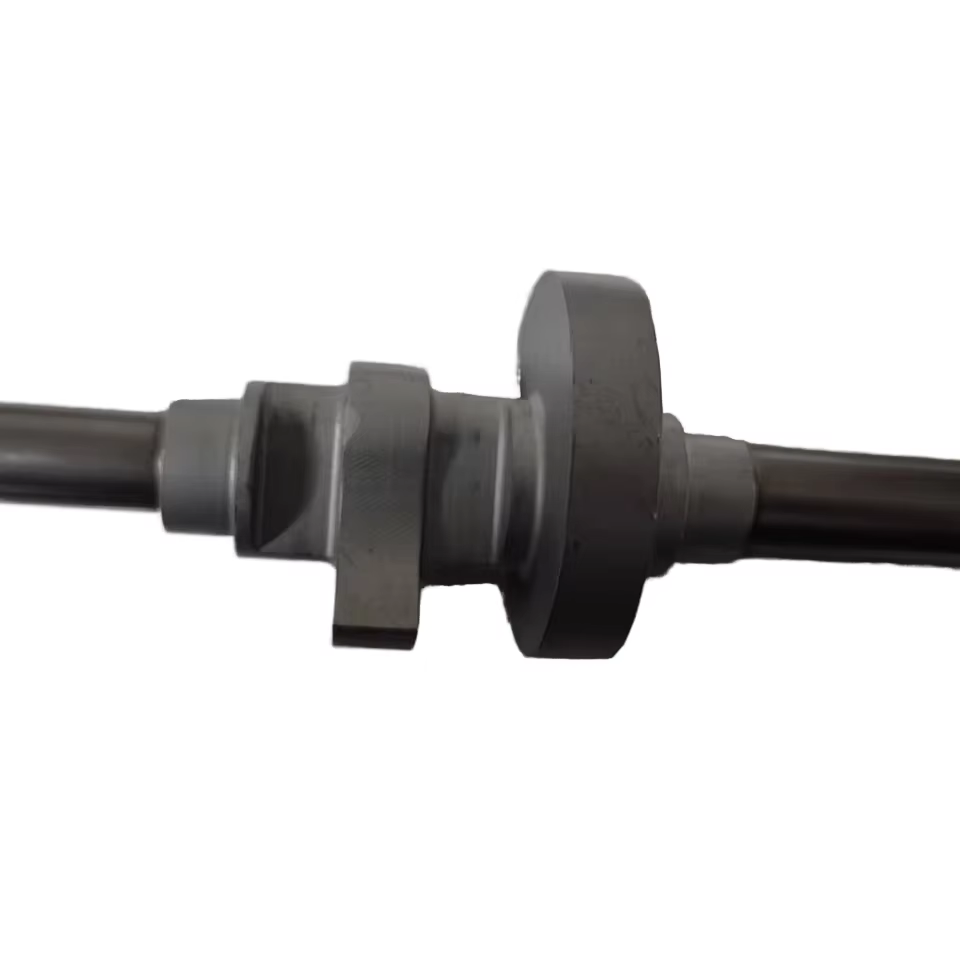
Understanding Fit, Form, and Function (FFF) as the Foundation of Custom Parts Compatibility
The Role of Fit, Form, and Function in Aftermarket and Custom Part Substitution
When talking about custom parts compatibility, Fit, Form, and Function (FFF) are pretty much essential factors to consider. Fit basically means how well something lines up dimensionally with what's already there. Form refers to the actual look and feel of the part itself, while Function is all about whether it can actually do what it needs to do operationally. According to some research in manufacturing circles, around seven out of ten compatibility issues come down to problems with one or more of these aspects. Take a suspension bracket as an example case study. It could have the right bolt holes (so the fit checks out), but if it doesn't handle enough weight (the function part), then it will just break down too soon when used on heavy equipment.
Applying FFF Principles to Evaluate Physical and Functional Equivalence
Engineers validate compatibility by assessing three dimensions:
- Physical measurements (fit) using coordinate-measuring machines
- Material composition and geometric design (form)
- Performance under simulated operational loads (function)
This triage minimizes installation errors and ensures replacements meet OEM specifications.
Case Study: Compatibility Failure Due to Ignoring FFF in Custom Engine Mounts
A 2023 analysis of aftermarket truck components revealed how a polyurethane engine mount caused excessive vibration despite matching original dimensions. The material’s lower damping coefficient (function) and altered thermal expansion rate (form) created resonance issues, highlighting the necessity of holistic FFF evaluation.
Digital Twin Simulations for Virtual Fit Verification in Custom Fabrication
Advanced manufacturers now use digital twin simulations to test compatibility pre-production. These virtual models analyze stress distribution, thermal behavior, and assembly kinematics, reducing physical prototyping costs by up to 40%. Simulating a CNC-machined bracket’s fit in a robotic assembly line can predict wear patterns months before deployment.
Precision Measurement and Tolerance Management for Dimensional Accuracy
Achieving compatibility in custom parts demands micron-level precision and systematic tolerance control. A 2023 International Journal of Advanced Manufacturing study revealed that 89% of installation failures in modified components stem from cumulative dimensional errors exceeding ±0.15mm.
Essential Tools: Calipers, Micrometers, and Torque Wrenches for Fit Validation
Leading manufacturers combine digital calipers (resolution ±0.01mm) with optical comparators to verify critical dimensions like bore diameters and flange thickness. For threaded components, pre-calibrated torque wrenches ensure fastener loads stay within 5–7% of OEM specifications—a proven method to prevent stress-induced failures.
Best Practices in Tolerance Analysis and Dimensional Inspection
Modern tolerance stacking analysis reduces interface mismatches by 62% compared to traditional single-feature inspection (Precision Engineering Consortium, 2024). Implementing statistical process control (SPC) with CMM (Coordinate Measuring Machine) validation maintains production consistency, particularly for batch-manufactured custom brackets and mounting plates.
Balancing Tight Tolerances with Cost-Efficiency in Manufacturing
While ASME Y14.5-2018 standards permit IT7-grade tolerances (±0.025mm) for most automotive components, optimized GD&T (Geometric Dimensioning and Tolerancing) strategies can reduce machining costs by 18–22% without sacrificing functionality. Recent case studies show applying profile tolerance controls to non-critical surfaces decreases rework rates by 41% in suspension component fabrication.
Material Selection and Quality Standards for Long-Term Compatibility
How Material Properties Impact Performance and Durability of Custom Parts
Material selection directly determines whether custom parts withstand operational stresses. A turbocharger bracket made from aluminum alloy 6061-T6 resists thermal cycling up to 315°C (600°F) due to its fatigue strength of 97 MPa (ASM International 2023), while cheaper mild steel counterparts may warp under repeated heating. Critical factors include:
- Tensile strength (resistance to deformation)
- Corrosion resistance (compatibility with fluids/environments)
- Thermal conductivity (heat dissipation efficiency)
For example, stainless steel bushings in marine applications last 3× longer than zinc-plated variants by mitigating saltwater pitting (NACE International 2022). Engineers must cross-reference ASTM material datasheets against application-specific load cycles and environmental exposures.
Adhering to Industry Standards: SAE and ISO Guidelines for Quality Assurance
The SAE and ISO standards give manufacturers something tangible to measure when evaluating materials. For instance, SAE J1194 sets out what level of hardness engine parts need to meet before they're approved for production. Meanwhile, ISO 527-2 lays down how to conduct tensile tests so different batches of material can be compared fairly. Companies that get their custom parts certified under ISO 9001 quality systems see around 36 percent drop in warranty issues according to Quality Digest from last year. Getting third parties involved to check compliance with these standards takes away a lot of uncertainty when making sure parts will work together properly in actual applications.
Pre-Installation Verification: Part Number Cross-Referencing and Mock-Ups
Using OEM Part Numbers and Technical Documentation to Confirm Compatibility
Verifying custom parts compatibility begins with rigorous cross-referencing of OEM (Original Equipment Manufacturer) part numbers against original equipment specifications. A 2023 industry study found that over 95% of fitment issues stem from mismatched part numbers when bypassing formal verification processes. Engineers should always:
- Cross-check OEM numbers against manufacturer schematics or equipment model plates
- Validate material grades and dimensional tolerances in technical datasheets
- Confirm electrical/mechanical ratings for high-stress components
For example, identical-looking HVAC motors often differ in mounting configurations or voltage requirements—a discrepancy detectable only through systematic part number validation.
Test Fitting and Prototyping to Prevent Real-World Installation Failures
Physical mock-ups remain indispensable for custom parts verification, with prototyping reducing installation failures by 60% in automotive retrofit projects (2022 case study). Advanced workshops now combine 3D-printed prototypes with digital twin simulations to:
- Identify interference points in complex assemblies
- Test load distribution on structural brackets
- Validate clearance tolerances under operational stresses
A well-documented prototyping phase often reveals issues like misaligned bolt patterns or thermal expansion mismatches that digital models might overlook—proving why hands-on verification remains critical for custom parts integration.
Solving Common Alignment Challenges: Bolt Patterns, Bushings, and Brackets
Diagnosing Misalignment Issues in Mounting Interfaces and Structural Fit
When custom parts don't align properly, it usually comes down to tiny issues like a 0.5 mm offset in the bolt pattern or simply worn out bushings. Many engineers have started turning to laser measuring equipment these days to spot those tricky angular problems at mounting points. According to research published by ASME in 2023, about one third of all installation problems actually come from flanges that have warped without anyone noticing them. What tends to happen next? Fasteners start taking on unequal amounts of stress, and bushings deform earlier than expected. This kind of wear and tear can cut down on how much weight something can safely hold by nearly half when there's constant vibration involved.
| Alignment Factor | Tolerance Threshold | Failure Risk Increase |
|---|---|---|
| Bolt hole center | ±0.25 mm | 22% |
| Bushing ID | ±0.10 mm | 34% |
| Bracket flatness | 0.3° angularity | 47% |
Using Adapters, Spacers, and Modification Kits for Perfect Fitment
When it comes to fixing those pesky bolt pattern mismatches, offset bushings and eccentric spacers actually handle around 80% of these problems without needing any kind of permanent changes to the parts. Now for really important jobs such as mounting turbochargers where everything has to line up just right, there are these fancy multi-axis CNC machined adapters that keep things aligned within less than a tenth of a millimeter between all the connecting surfaces. And interestingly enough, according to some research published last year looking at suspension system upgrades from third party manufacturers, about seven out of ten fitment problems got sorted simply by adding tapered shims instead of going through the hassle and expense of replacing entire components.
Guidelines for Safe and Effective Custom Fabrication Adjustments
Always prioritize metallurgical compatibility when welding or machining brackets—mixing dissimilar alloys accounts for 18% of stress corrosion failures. Follow these protocols for structural modifications:
- Validate load paths via finite element analysis (FEA) before cutting
- Maintain minimum edge distances of 1.5× bolt diameter
- Use progressive torque sequences (25%-50%-100% spec) during final assembly
Post-modification ultrasonic testing reveals 92% of fatigue cracks originate near improperly radiused bracket corners (ASTM E290-22).
FAQ
What is Fit, Form, and Function (FFF) in custom parts?
Fit, Form, and Function are essential factors in custom parts compatibility. Fit refers to how well the part dimensionally aligns with existing components, Form relates to the part's appearance and design, and Function determines if the part can perform its intended operations.
How are digital twin simulations used in testing custom parts?
Digital twin simulations test compatibility by analyzing stress distribution, thermal behavior, and assembly kinematics in virtual models, thereby reducing physical prototyping costs and predicting wear patterns before production.
Why is material selection important in custom parts?
Material selection affects performance and durability, with properties like tensile strength, corrosion resistance, and thermal conductivity determining the part's ability to withstand operational stresses and environmental exposures.
How are tolerance mismatches addressed in manufacturing?
Modern tolerance stacking analysis and the use of statistical process control (SPC) with CMM validation reduce mismatches, while tools like calipers and micrometers ensure dimensional accuracy and proper fit.
How can bolt pattern mismatches be resolved?
Offset bushings and eccentric spacers can resolve mismatches, and CNC machined adapters ensure precise alignment. Additionally, adding tapered shims can effectively address fitment issues without replacing entire components.
Table of Contents
-
Understanding Fit, Form, and Function (FFF) as the Foundation of Custom Parts Compatibility
- The Role of Fit, Form, and Function in Aftermarket and Custom Part Substitution
- Applying FFF Principles to Evaluate Physical and Functional Equivalence
- Case Study: Compatibility Failure Due to Ignoring FFF in Custom Engine Mounts
- Digital Twin Simulations for Virtual Fit Verification in Custom Fabrication
- Precision Measurement and Tolerance Management for Dimensional Accuracy
- Material Selection and Quality Standards for Long-Term Compatibility
- Pre-Installation Verification: Part Number Cross-Referencing and Mock-Ups
- Solving Common Alignment Challenges: Bolt Patterns, Bushings, and Brackets
- FAQ